
Industrial machines are becoming increasingly automated, but many production processes still require operators to work directly beside equipment. Loading materials, unloading finished products, adjusting machine settings, inspecting components, and carrying out routine interventions can all require personnel to enter areas close to moving machinery.
For these applications, an Operator Safety Mat can provide a practical method of detecting operator presence in a designated floor area.
Unlike a fixed physical barrier, an Operator Safety Mat is installed where personnel actually stand or move during machine operation. When the sensing surface is activated by pressure, the mat changes its switching state and provides a signal to the machine's safety control system.
For OEM machine builders, automation integrators, and industrial equipment manufacturers, selecting an Operator Safety Mat is therefore not simply a matter of choosing a floor product. The solution needs to match the machine layout, operator workflow, electrical architecture, environmental conditions, and long-term replacement requirements.
Operator Access Should Be Considered During Machine Design
The first question for an OEM engineer should be how operators interact with the machine.
Some equipment requires personnel to remain outside the machine enclosure during automatic operation. Other machines are designed around frequent manual intervention. An operator may need to load components from the front, monitor a production process from the side, or access a particular section of the machine during setup.
These different workflows create different safety requirements.
An Operator Safety Mat can be positioned within the operator access area so that personnel presence can be detected at the point where access matters.
This makes the product particularly relevant to:
Automated machinery
Robot-based production systems
Operator loading stations
Material handling equipment
Industrial processing machinery
Machine workstations
Equipment requiring regular operator intervention
Specialized machinery
Rather than selecting a mat after the machine has already been designed, OEM teams can include the safety detection area during the machine-layout stage.
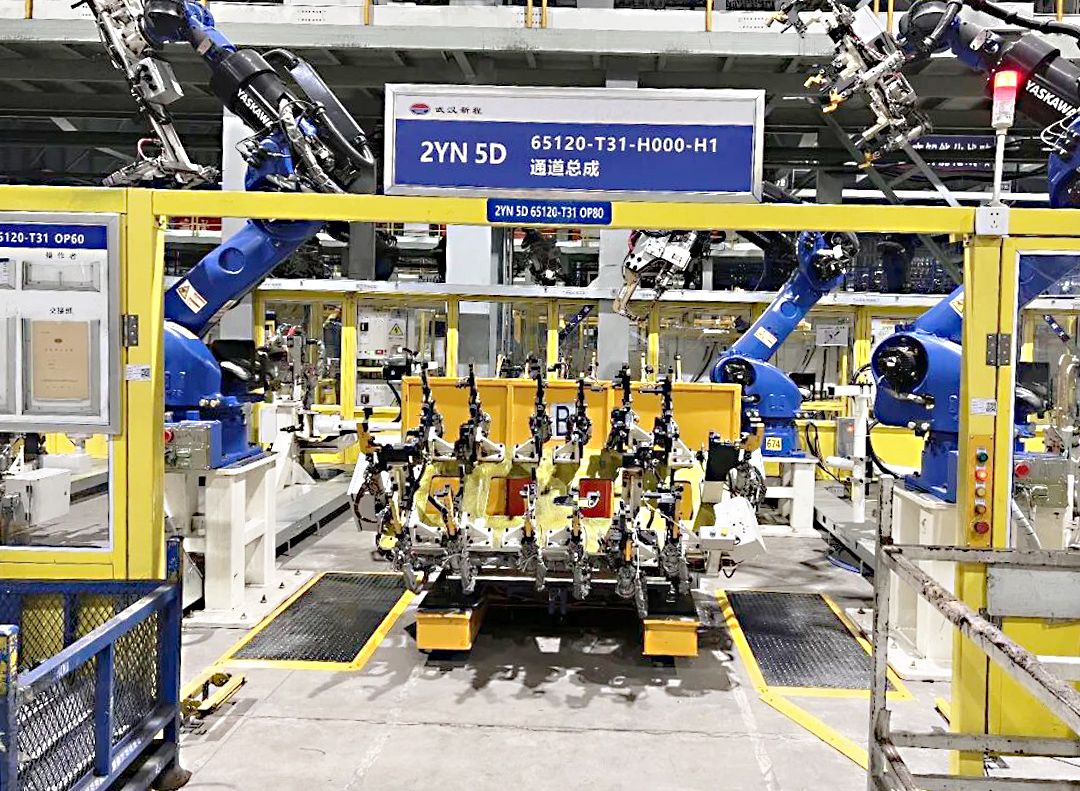
Matching the Mat to the Operator Working Zone
The required safety-mat configuration depends heavily on the operator's working position.
A compact machine may only require a single mat positioned directly in front of the operator station. A larger machine may require several mats to cover multiple access points.
The product range supports multi-mat installation, allowing several mats to be combined to create a larger detection area.
This approach can be useful for OEM manufacturers producing different machine sizes. Instead of creating a completely different safety concept for every machine, engineers can build a modular approach around several standard mat dimensions.
Available standard sizes include:
500 × 500 mm
1000 × 500 mm
1000 × 750 mm
1000 × 1000 mm
1500 × 1000 mm
2000 × 1000 mm
These sizes provide a practical starting point for machine designers.
Where a standard configuration does not match the actual operator working area, customized dimensions can be discussed according to the manufacturer's available production range.
Integrating Operator Safety Mat With the Machine
An important consideration for machine builders is how the Operator Safety Mat connects with the rest of the safety architecture.
The mat primarily functions as a pressure-sensitive detection component and switching-signal source. When the specified pressure condition is detected, its output can be incorporated into the machine's safety control system.
The subsequent machine response depends on the complete safety architecture, including the safety controller and machine safety circuit.
This distinction is important when developing OEM equipment.
The Operator Safety Mat should therefore be considered one component within the overall machine safety system rather than described as an independent emergency-stop or standalone machine-shutdown device.
During machine development, engineering teams should determine how the mat signal will be incorporated into the safety controller and how the machine is designed to respond when operator presence is detected.
Performance Specifications for Industrial Applications
For industrial buyers, product dimensions are only one part of the selection process.
The standard SC4 safety mat provides several specifications relevant to industrial machine applications.
The approximate adult activation force is 30 kg, while the response time is ≤30 ms.
The product also supports a dynamic load of approximately 500 kg and a static load of approximately 800 kg.
The standard operating temperature range is approximately -10°C to +60°C.
These specifications should be considered together with the actual machine environment and expected loading conditions.
For OEM projects, providing the supplier with the expected application and operating conditions can help ensure that the selected configuration is appropriate for the equipment.
Choosing the Right Protection Level
Operator workstations can be located in very different industrial environments.
Some applications operate in relatively dry indoor production areas. Others may involve water, cleaning processes, or more demanding environmental conditions.
The product range includes:
Standard Safety Mat — IP65
Waterproof Safety Mat — IP67
Selecting the protection level at the beginning of the project can help prevent compatibility problems later.
For equipment exposed to water or higher moisture levels, the waterproof configuration may be more suitable. For standard industrial environments, the IP65 version can be selected according to the application requirements.
OEM manufacturers should therefore include environmental conditions in the initial product specification rather than treating protection rating as an afterthought.
Replacement Planning Is Part of OEM Safety Management
For an OEM manufacturer, the relationship with a safety-mat supplier does not necessarily end when the first machine is delivered.
Machines operating in production environments may eventually require replacement safety mats due to long-term use, physical damage, machine modification, or maintenance requirements.
This makes replacement planning an important part of the original sourcing decision.
A good OEM specification should record:
Product model
Mat dimensions
Installation configuration
Protection rating
Application
Electrical integration requirements
Supplier information
Expected replacement requirements
Maintaining consistent specifications can make future replacement much easier.
This is particularly important for machine manufacturers whose equipment remains in service for many years. If the original product configuration is properly documented, the replacement process can be much more efficient.
Standardization Can Reduce OEM Procurement Complexity
OEM manufacturers often produce several machine models that share similar operating principles.
If each model uses a completely different safety-mat configuration, procurement and inventory management can become unnecessarily complicated.
Standardizing selected Operator Safety Mat configurations can help reduce this complexity.
For example, an OEM may establish several preferred mat sizes for different machine platforms and use multi-mat combinations where larger operator zones are required.
This can create a more consistent procurement structure:
Engineering teams can work with predefined configurations.
Purchasing teams can consolidate recurring orders.
Warehouse teams can manage a smaller range of commonly used components.
Production teams can install familiar configurations across different machine models.
After-sales teams can identify replacement requirements more quickly.
For manufacturers purchasing safety mats repeatedly, this standardization can become an important part of long-term sourcing strategy.
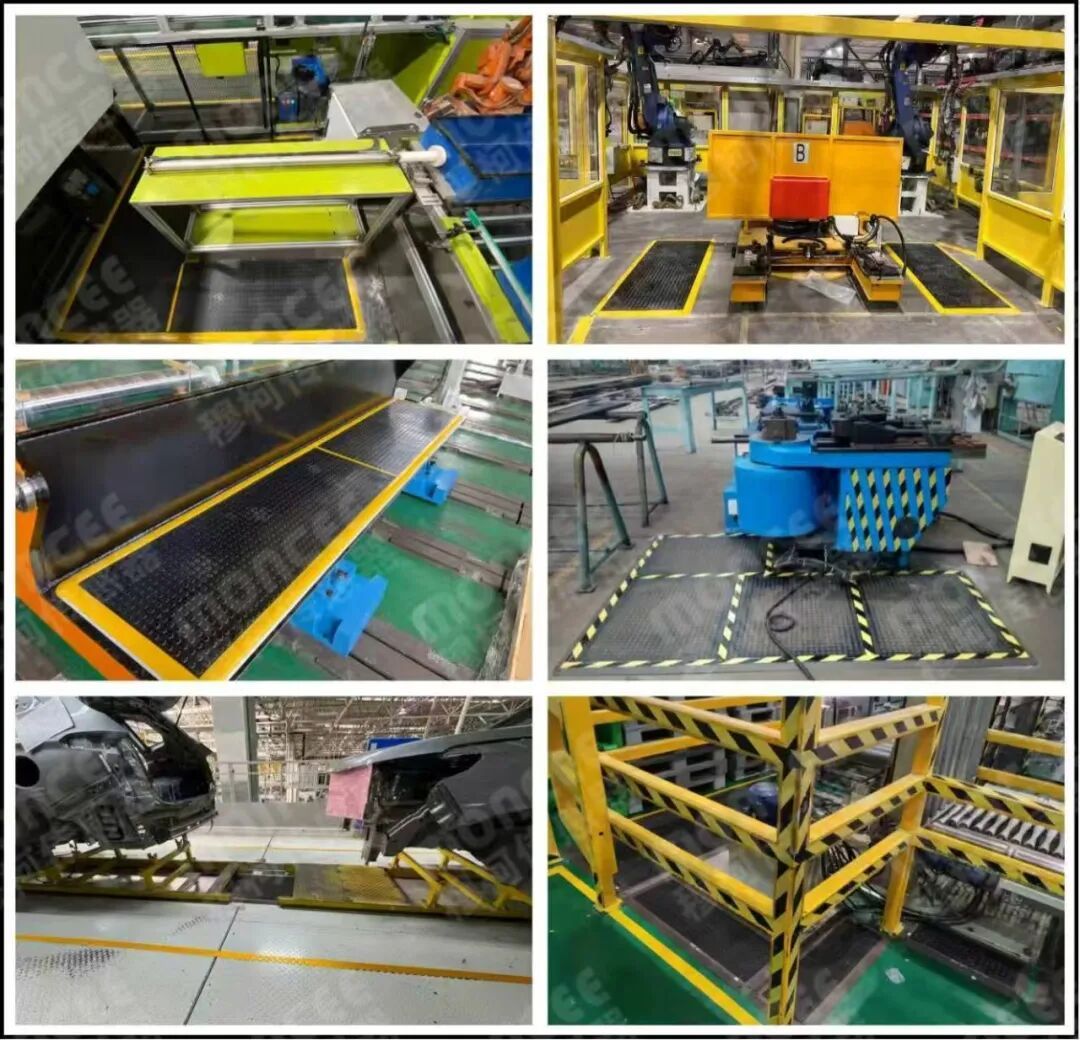
Specialized Equipment May Require Different Configurations
Operator safety requirements are not limited to conventional factory automation.
The product range also supports specialized applications such as forklift safety and car wash machinery.
For example, the documented car wash safety-mat configuration is approximately 800 × 200 mm, with a PUR surface, an activation force of approximately 30 kg, and a response time of ≤30 ms.
These specialized applications demonstrate why OEM customers should describe the actual equipment when requesting a quotation.
A supplier evaluating a mat for a conventional automation machine may need different information from a supplier evaluating a product for a car wash or forklift-related application.
Application-specific information helps establish whether a standard product or a specialized configuration is appropriate.
What OEM Buyers Should Include in an RFQ
A detailed inquiry can significantly improve communication between the buyer and supplier.
Instead of requesting only an “Operator Safety Mat,” OEM customers should ideally provide:
Machine type
Operator working position
Required mat dimensions
Required detection area
Environmental conditions
Expected static and dynamic loads
Required protection rating
Single-mat or multi-mat configuration
Safety-controller integration requirements
Estimated order quantity
Expected repeat-purchase requirements
For customized projects, drawings or machine-layout information can also help suppliers understand the application more accurately.
This approach allows the supplier to respond with a solution based on the actual machine rather than simply recommending the nearest standard product.
Build a Long-Term Operator Safety Mat Supply Strategy
For industrial machine manufacturers, an Operator Safety Mat should be considered as part of both machine protection and long-term equipment support.
The right configuration can help detect operator presence in designated working areas, while standardized dimensions, multi-mat options, different protection levels, and application-specific configurations provide flexibility for different equipment designs.
For OEM customers, the sourcing decision should also consider what happens after the first machine is delivered.
A supplier capable of supporting standard products, custom dimensions, multi-mat configurations, specialized applications, repeat orders, and replacement requirements can provide greater value throughout the equipment lifecycle.
Whether you are developing a new machine, standardizing safety components across multiple models, replacing existing safety mats, or preparing a long-term procurement program, the most effective starting point is to provide the supplier with your actual application requirements.
Contact us with your machine type, operator working area, required dimensions, environmental conditions, protection rating, quantity, and replacement requirements to discuss an Operator Safety Mat solution tailored to your industrial equipment.



 English
 简体中文
 Indonesian
 Previous:
 Back to list


