
Modern warehouses are becoming increasingly automated. AGVs, AMRs, automated material-handling equipment, conveyors, industrial doors, and mobile transport systems operate alongside fixed infrastructure and personnel. As equipment becomes faster and warehouse layouts become more dynamic, physical impact protection becomes an increasingly important part of machine safety design.
An industrial safety bumper provides a practical way to detect physical contact and help initiate an appropriate machine response. For warehouse operators, equipment manufacturers, OEMs, and system integrators, the right safety bumper can be incorporated directly into mobile equipment and other areas where conventional guarding may not be practical.
Rather than selecting a bumper based only on appearance or price, buyers should evaluate its sensing characteristics, mechanical construction, installation requirements, environmental suitability, and compatibility with the overall safety-control architecture.
What Is an Industrial Safety Bumper?
An industrial safety bumper is a pressure-sensitive protective device designed to detect physical impact or compression. When an object or person contacts the bumper, its internal sensing mechanism can generate a signal for the connected control system.
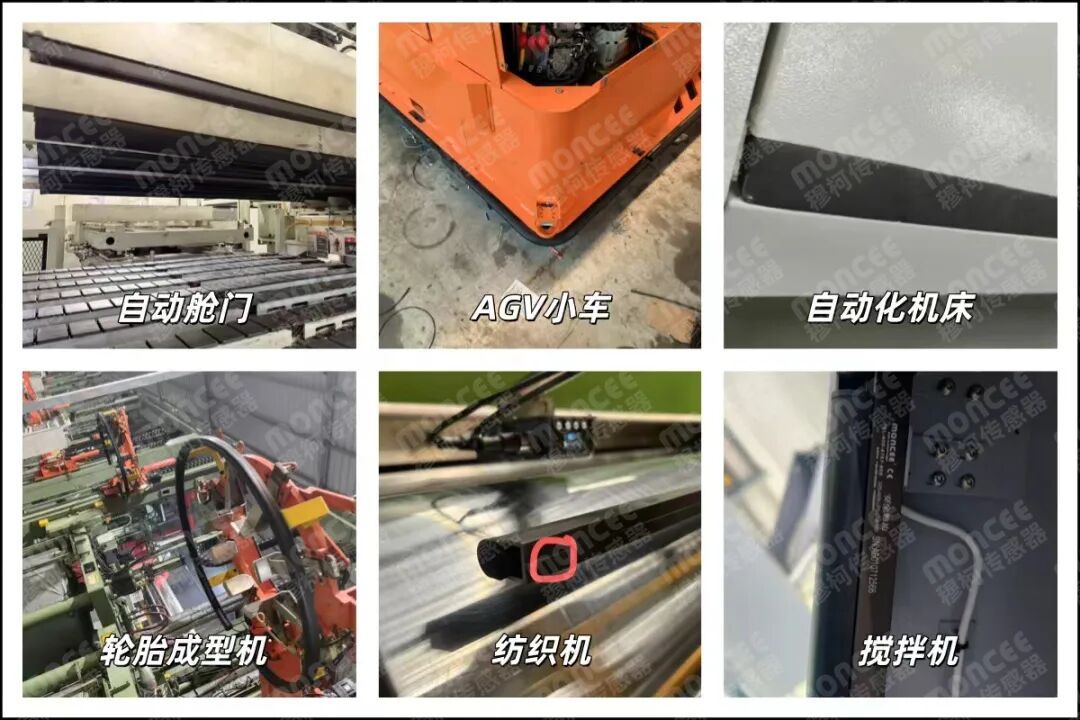
This makes safety bumpers particularly relevant to mobile warehouse equipment. Manufacturer information identifies AGVs, intelligent logistics, material-handling equipment, and other industrial automation applications among the environments in which its safety sensing products are used.
Unlike a conventional mechanical bumper whose primary purpose is simply to absorb impact, a safety bumper combines physical protection with contact detection. This enables it to become part of a broader machine-safety strategy.
For warehouse automation, that distinction can be commercially important: the objective is not merely to protect equipment from collision, but to provide the machine with a means of recognizing contact and responding through its control system.
Why Warehouses Need Application-Specific Protection
Warehouse environments are rarely static. Vehicle routes change, storage configurations evolve, and automated equipment may operate in confined spaces.
An AGV or mobile handling vehicle may encounter:
Pallet racks
Loading areas
Automated doors
Production interfaces
Conveyors
Other vehicles
Fixed machinery
Personnel working near operating routes
Because each application has different mechanical and operational characteristics, a single standard bumper configuration may not be suitable for every vehicle.
An industrial safety bumper should therefore be selected according to the vehicle dimensions, expected contact conditions, installation location, and required machine response.
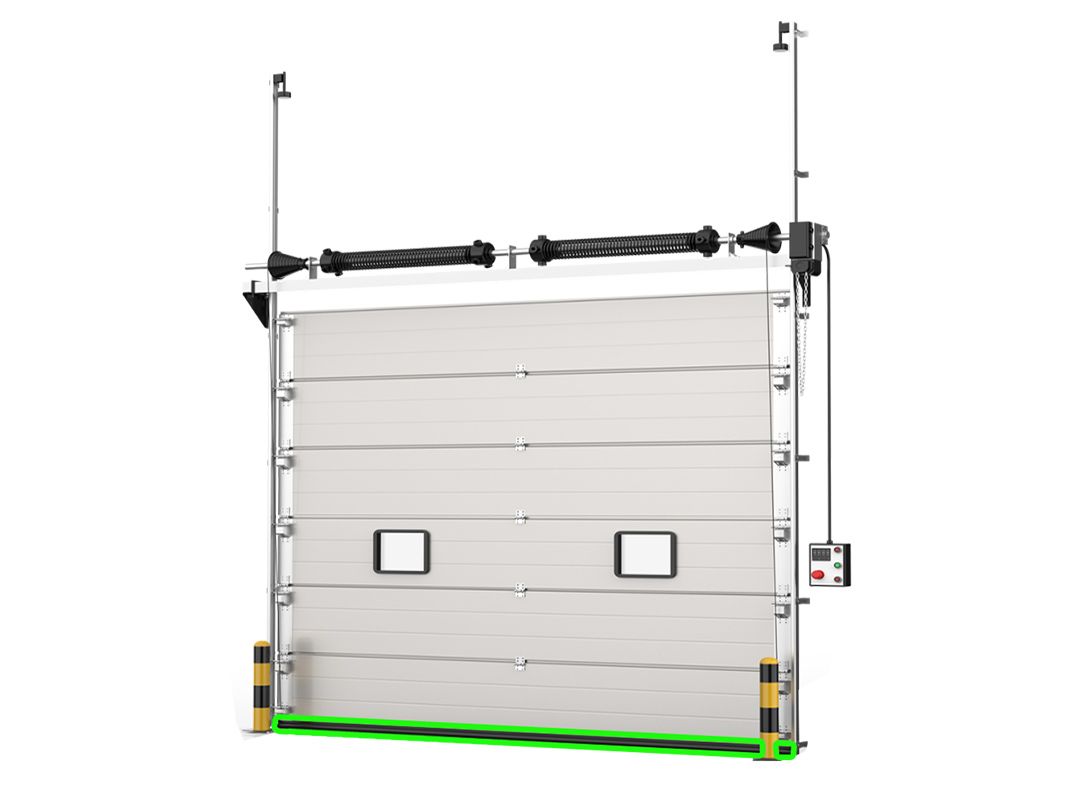
Profile Design and Sensing Characteristics Matter
The mechanical design of a safety bumper directly affects how it responds to contact.
Related safety-edge products use different profile shapes to accommodate different Trigger Distance and force requirements. The manufacturer specifically recommends considering the distance between initial pressure and the required compression level, together with the corresponding contact force, when selecting a model.
This principle is also relevant when evaluating industrial safety bumpers.
Warehouse equipment designers should determine how contact is expected to occur. A bumper mounted on the front of an AGV may encounter obstacles horizontally, while another configuration may need to accommodate contact from a different direction.
The geometry, compression characteristics, and mounting structure should therefore be considered together rather than evaluated independently.
Trigger Force Should Match the Equipment
Trigger Force is an important engineering parameter because it determines the amount of force associated with activation.
For an industrial safety bumper, the appropriate force characteristics depend on the application. Engineers should consider the vehicle's speed, mass, braking characteristics, contact surface, and the type of obstacle that may be encountered.
A warehouse vehicle operating in a narrow aisle can have very different requirements from a slower automated platform operating within a controlled production cell.
For OEMs, defining the expected contact scenario before selecting the bumper can help ensure that the sensing characteristics correspond to the actual machine design.
Integration With the Safety Control System
A safety bumper should not be considered as an isolated component. Its practical value depends on how it is integrated into the machine's control architecture.
The sensing output needs to be connected to an appropriate control system capable of initiating the required response. Depending on the equipment design, this may involve a safety controller, safety relay, or other suitable control architecture.
Manufacturer information for related Safety Edge products describes both normally open and normally closed configurations and connection options involving safety controllers.
For OEM projects, electrical configuration should therefore be defined during the engineering stage rather than after mechanical installation has already been completed.
Mechanical Integration Is Critical for AGVs
For mobile warehouse equipment, mounting design is particularly important.
An industrial safety bumper needs to remain securely positioned during normal vehicle operation while still providing the intended sensing function when contact occurs.
The mounting structure should account for:
Vehicle frame geometry
Available installation space
Bumper dimensions
Cable routing
Direction of expected impact
Maintenance access
Replacement requirements
For manufacturers producing multiple AGV or AMR models, standardized mounting arrangements can also simplify assembly and servicing.
Environmental Conditions Should Not Be Overlooked
Warehouses may appear to be controlled environments, but industrial logistics facilities can expose equipment to dust, moisture, temperature changes, vibration, cleaning chemicals, and repeated mechanical contact.
The safety bumper's materials and construction should therefore be evaluated according to the actual operating environment.
For demanding applications, buyers should discuss environmental conditions with the manufacturer before finalizing the product configuration. This is particularly important when the equipment operates between indoor production areas, loading zones, cold storage areas, or partially exposed environments.
Customization Creates an Advantage for OEM Buyers
One of the key benefits of purchasing directly from an industrial safety-sensor manufacturer is the possibility of application-specific customization.
The manufacturer describes its safety products as supporting customized solutions and identifies its own production facilities, inspection processes, and customization services.
For OEM customers, customization can cover practical requirements such as profile configuration, dimensions, length, mounting arrangements, and other application-specific characteristics.
This can be particularly valuable when an AGV chassis has limited installation space or when the bumper needs to follow a non-standard vehicle geometry.
Instead of redesigning the vehicle around a standard component, OEM engineers can work from the machine's actual requirements.
What Should Buyers Ask Before Purchasing?
When sourcing an industrial safety bumper for warehouse equipment, procurement teams should provide as much application information as possible.
Useful information includes:
Equipment or vehicle type
AGV or AMR dimensions
Intended bumper location
Expected impact direction
Operating speed
Vehicle mass and braking characteristics
Required Trigger Force
Required Trigger Distance
Mounting dimensions
Cable and control-system requirements
Operating environment
Expected production quantity
Providing these details enables the manufacturer to evaluate the application rather than simply supplying a generic product.
Why Choose a Specialized Manufacturer?
For warehouse automation projects, a specialized industrial safety-sensor manufacturer can offer more than a standard component.
An experienced supplier can support product selection, configuration, customization, sampling, and production requirements. Manufacturer information indicates a product range covering Safety Edge, AGV Safety Bumper, safety mats, light curtains, and other industrial safety sensing equipment.
This broader product capability can be useful for system integrators developing complete warehouse automation solutions, because different machine zones may require different types of protective sensing.
Conclusion
The best industrial safety bumper for warehouse protection is not necessarily the largest, most expensive, or most heavily marketed product. The appropriate solution depends on the actual vehicle, operating environment, impact conditions, mechanical structure, and safety-control requirements.
For AGVs, AMRs, automated material-handling equipment, and other warehouse systems, buyers should evaluate profile design, Trigger Force, Trigger Distance, mounting, electrical integration, environmental conditions, and customization options before placing an order.
For OEMs, warehouse automation companies, system integrators, and distributors, working directly with a manufacturer can also simplify the process of developing application-specific configurations.
If you are sourcing an industrial safety bumper for an AGV, AMR, or warehouse automation project, provide the equipment drawings, bumper installation area, vehicle dimensions, operating speed, expected contact conditions, wiring requirements, and environmental information. These details give the manufacturer a practical basis for recommending a suitable configuration and preparing samples or a commercial quotation.



 English
 简体中文
 Indonesian
 Previous:
 Back to list


