
Many sheet metal fabrication shop owners have experienced this problem: they invest in an infrared light curtain to protect a press brake, expecting it to provide safety without affecting production efficiency. However, once production begins, frequent false stops occur. Operators find the system inconvenient and may secretly block or bypass the light curtain, causing the safety barrier to become virtually ineffective.
The problem is not necessarily poor quality of the infrared light curtain. Rather, its fundamental operating characteristics make it less suitable for press brake applications.
1. Four Major Limitations of Infrared Light Curtains That Can Reduce Press Brake Productivity
①Frequent False Alarms Waste Production Capacity
The position of an infrared beam is fixed.
When bending U-shaped parts, box-shaped parts, or long-edge flanges, the upward-curving flange of the sheet metal can easily block the beam and trigger an emergency stop.
A single false stop may take more than ten seconds. If this happens dozens of times a day, production capacity can be gradually lost.
To maintain production output, operators may resort to blocking or bypassing the light curtain. Once this happens, the safeguarding system becomes ineffective and the risk of hand or finger crushing increases significantly.
②Excessive Safety Distance Can Create Critical Blind Spots
According to applicable safety requirements, an infrared light curtain must be installed at a certain safety distance from the hazardous area around the press brake tooling.
This distance can create a gap between the detection zone and the actual point of danger.
That gap may provide an opportunity for an operator's hand to enter the die area.
Although the light curtain appears to be installed correctly, the high-risk area may not actually be adequately protected. This can create a “false sense of security” — the system appears safe, but does not effectively prevent access to the actual hazard.
③Invisible Infrared Beams Make Setup and Adjustment Time-Consuming
Every time a set of tooling is replaced, the position of the light curtain may need to be readjusted.
Because infrared beams are invisible to the naked eye, operators must rely on repeated machine testing to determine whether the protective field is correctly aligned with the hazardous area.
As a result, a tool change that may take only five minutes can be followed by another half hour of light curtain adjustment.
This can significantly reduce production efficiency.
④Workshop Conditions Can Cause Interference and Reduce Stability
Sheet metal fabrication workshops commonly contain dust, oil mist, and strong artificial lighting, all of which can potentially interfere with infrared signals.
This may result in occasional unexplained machine stops or signal failures.
When such problems occur intermittently, troubleshooting can also be difficult because the root cause may not be immediately identifiable.
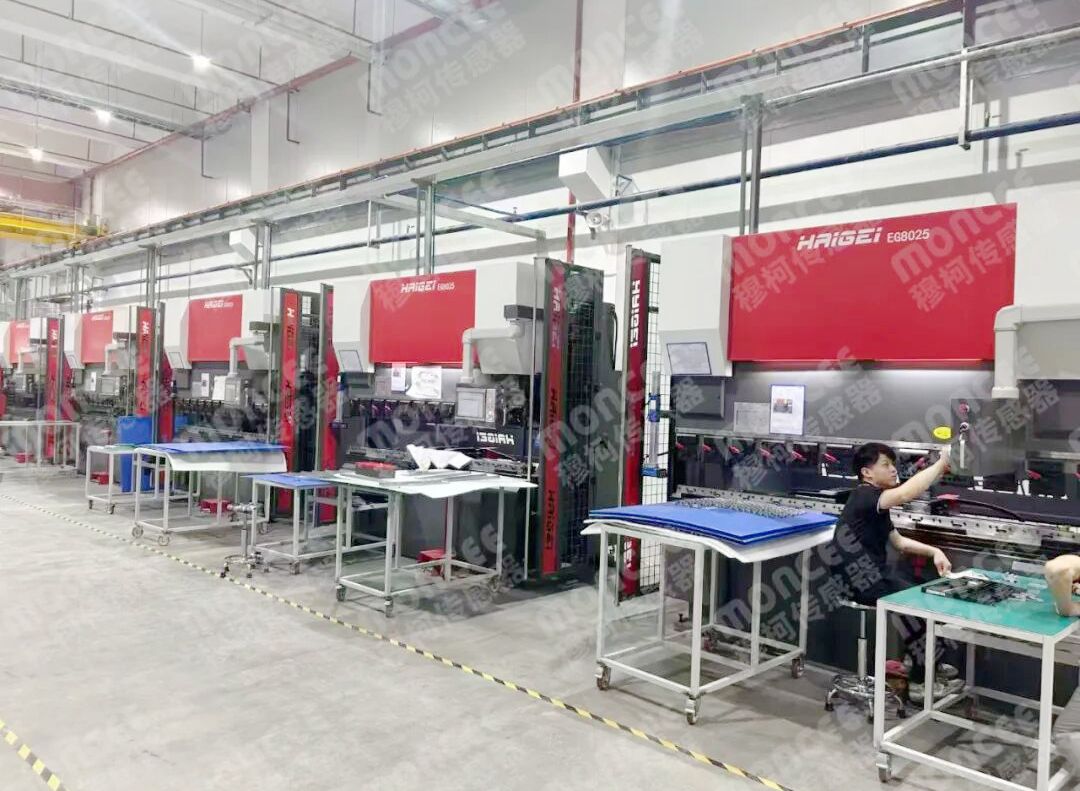
2. Laser Protection Devices Directly Address the Key Challenges of Press Brake Applications
The key difference with a laser protection device is its dynamic protection method.
The sensing probe moves downward synchronously with the press brake's upper slide/ram, while the protective beam remains close to the area beneath the punch.
Wherever the hazardous area moves, the protective field follows.
Its core advantage is that it can intelligently synchronize with the press brake's operating cycle, enabling protection during the fast approach stage and automatically disabling the protective beam during the slow approach/bending stage.
Intelligent Segmented Operation: No More False Stops During U-Shaped and Box Bending
Fast Approach Stage — Upper Slide Moves Down Rapidly
During the fast approach stage, laser protection remains fully active.
At this point, the tooling has not yet contacted the sheet metal, so the risk of hand or finger crushing remains high.
If a finger, hand, or foreign object enters the protected beam area, the system immediately sends a stop signal and initiates machine braking to help protect personnel.
Slow Approach / Bending Stage — Pressing and Bending Operation
When the upper slide moves down toward the sheet metal and begins applying pressure for bending, the laser protection is temporarily disabled automatically.
At this stage, the flanges of the sheet metal or the raised edges of box-shaped parts may block the light beam. Because the protection function is intelligently synchronized with the machine's operating stage, these normal workpiece movements no longer trigger unnecessary machine stops.
As a result, U-shaped parts, box-shaped parts, and segmented bending operations can be produced more smoothly, achieving a better balance between safety and production efficiency.
Millimeter-Level Protection Close to the Tooling Helps Eliminate Blind Spots
The protective beam can be positioned only a few millimeters from the cutting edge/punch area, allowing the hazardous zone to be monitored much more closely.
By positioning the protective field close to the actual point of danger, the gap through which an operator's hand could enter the hazardous area can be minimized.
This helps address the common problem of:
“The light curtain has been installed, but an accident can still happen.”
Visible Red Laser: Quick and Intuitive Tool-Change Adjustment
The red laser beam is clearly visible to the naked eye.
After changing the tooling, operators can immediately see the position of the protective beam and adjust it according to the actual tooling position.
This makes alignment more intuitive and can significantly shorten setup time, eliminating repeated trial-and-error adjustments.
15 ms Response Time: Rapid Stop When a Hand Enters the Protected Area
If a finger, hand, or arm accidentally enters the laser protection zone, the system can immediately detect the intrusion and send a stop signal.
With a response time of 15 ms, the system can rapidly initiate a safety stop and braking action, providing an additional layer of protection for the operator's hands during bending operations.
Stronger Interference Resistance for Complex Sheet Metal Workshops
Laser beams have stronger directional characteristics.
In workshop environments containing dust and complex lighting conditions, the system can provide stronger resistance to interference and help reduce the risk of false triggering.
This supports more stable and reliable long-term operation of the press brake safety system.
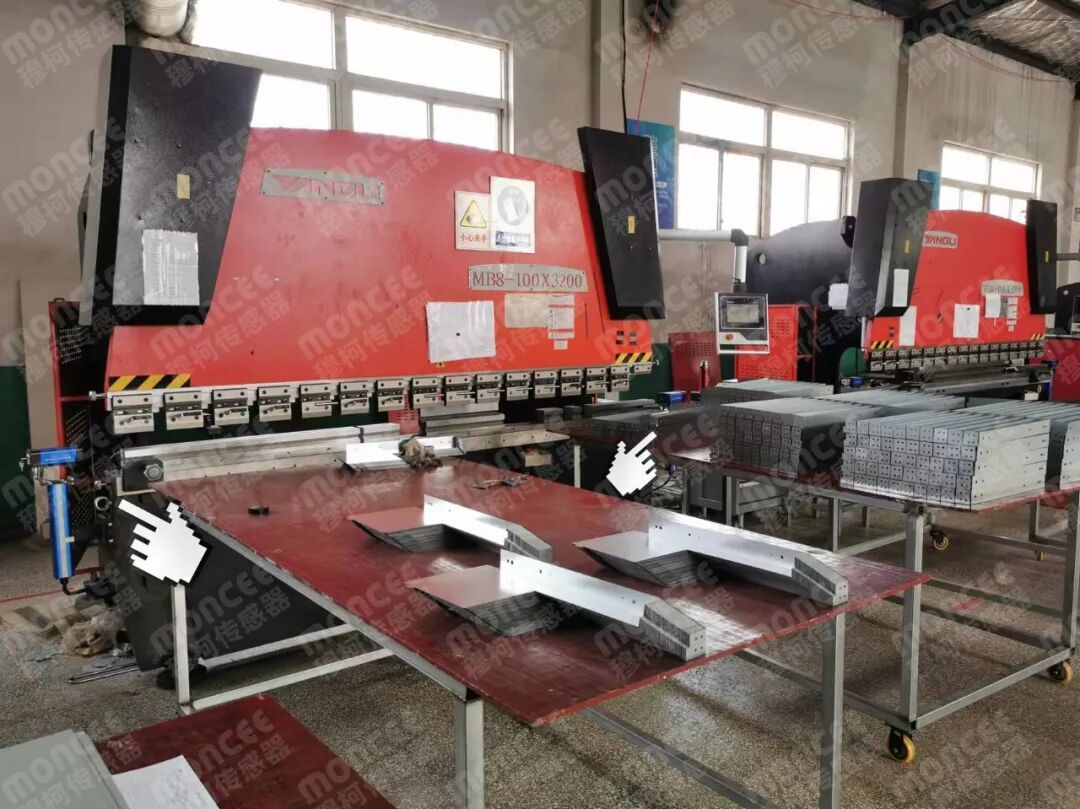
Selection Summary
Infrared Light Curtains Have Not Become Obsolete — They Need to Be Used in the Right Applications
Infrared light curtains still have suitable applications.
They can be appropriate for punch presses, conveyor lines, robot safety fencing, and other applications where the hazardous area is relatively fixed.
However, a press brake has very different operating characteristics.
The hazardous area around a press brake changes dynamically as the tooling moves, while the shape of the workpiece also changes throughout the bending process.
Therefore, the inherent limitations of conventional infrared protection can be difficult to eliminate in press brake applications.
As more sheet metal fabrication plants upgrade and retrofit their equipment, dynamic tracking laser protection devices that follow the movement of the press brake are becoming an increasingly important approach to press brake safeguarding.
It is better to invest in a reliable protection system from the beginning than to later bear the potentially enormous costs associated with workplace injuries, compensation, production shutdowns, and corrective actions.
Effective machine safeguarding is not simply about installing a protective device. It is about choosing a solution that is genuinely suited to the machine's hazards and operating process.



 English
 简体中文
简体中文 Indonesian
 Previous:
 Back to list


