
Selecting an Industrial Safety Light Curtain Manufacturer is an important decision for companies involved in machine building, industrial automation, system integration, and safety equipment distribution. Unlike ordinary industrial sensors, a safety light curtain becomes part of a machine's safeguarding system. Therefore, supplier selection can affect not only product performance, but also engineering efficiency, delivery schedules, after-sales costs, and long-term business continuity.
For companies purchasing safety light curtains in volume, the real question is not simply, “Which product has the lowest price?” A more important question is:
Which manufacturer can consistently provide the right product, technical support, production capacity, and commercial service for my business?
This guide presents a business-oriented approach to selecting an Industrial Safety Light Curtain Manufacturer, with particular attention to OEM projects, industrial equipment manufacturers, distributors, and automation integrators.
1. Evaluate the Manufacturer Behind the Product
A product catalog can tell you specifications, but it cannot tell you whether a supplier is capable of supporting your business over several years.
When evaluating an Industrial Safety Light Curtain Manufacturer, look beyond the individual model and examine the manufacturer's overall product platform.
A professional manufacturer should ideally have multiple configurations that allow customers to address different machine applications without developing a completely new solution for every project.
The GT Series Safety Light Curtain, for example, is available with different beam-spacing options, including 10 mm, 20 mm, 30 mm, 40 mm, and 80 mm. Depending on the model, protection height can range from approximately 100 mm to 2840 mm, with a working range of up to 20 m.
For an OEM customer, this product-platform approach can simplify purchasing and engineering. Instead of working with multiple suppliers for different machine designs, a customer may be able to standardize more of its safety components around one manufacturer.
This can reduce supplier-management complexity and make future product replacement easier.
2. Check Whether the Manufacturer Understands Industrial Applications
A reliable Industrial Safety Light Curtain Manufacturer should understand how its products are used in real machines.
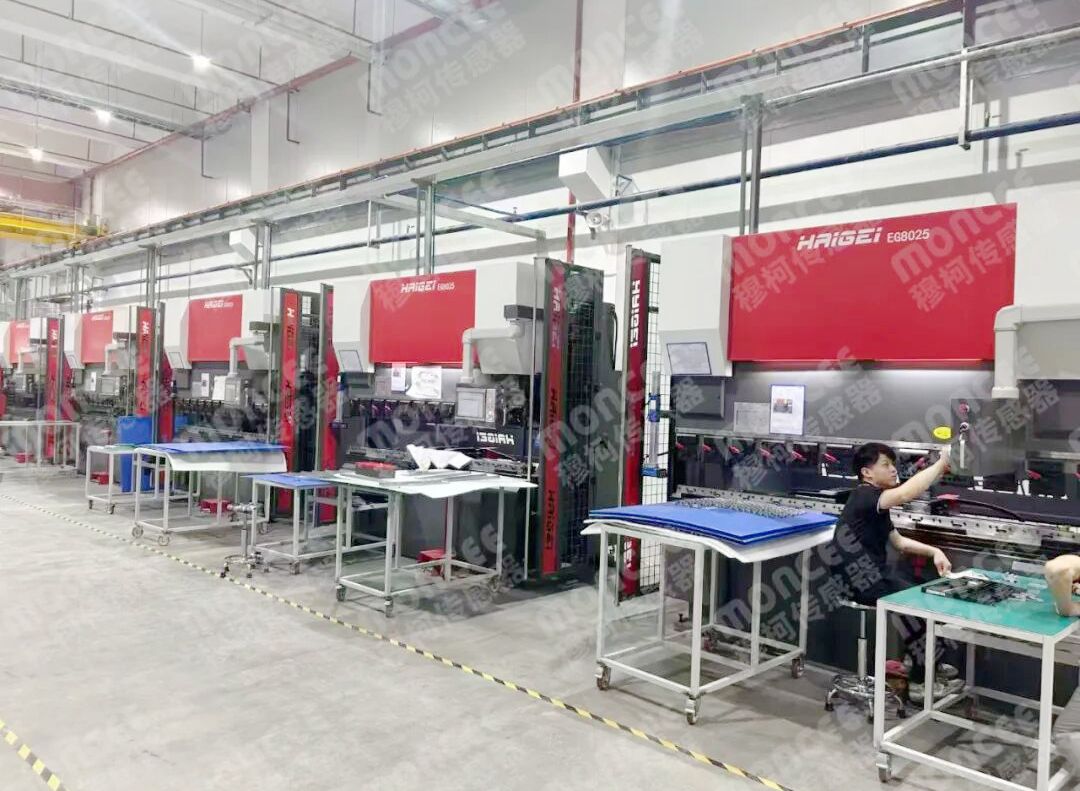
The same light curtain specification may not be equally suitable for every application. Press machines, punching equipment, shearing machines, injection molding machines, assembly equipment, cutting machinery, and automated production lines can have very different operating conditions and safeguarding requirements.
Therefore, a useful supplier should be able to discuss your application rather than simply recommend the most expensive or most popular model.
Before requesting a quotation, provide information such as:
Machine type
Hazardous area
Required protection height
Required detection capability
Installation position
Approximate sensing distance
Machine control architecture
Expected annual demand
A manufacturer that asks detailed engineering questions before quoting is often better positioned to support an industrial project than a supplier that immediately sends a price list.
3. Examine the Manufacturer's Product Integration Capability
Industrial customers rarely purchase a safety light curtain as a completely isolated component.
The light curtain normally needs to interact with the machine's safety control architecture. This makes controller compatibility, output configuration, wiring, reset functions, and commissioning support commercially important.
The GT Series documentation includes dedicated safety controllers such as SBC-01 and SPC-01, with configurations supporting NPN/PNP outputs and relay interfaces. The relevant controller documentation specifies a response time of ≤20 ms.
For an OEM machine builder, having access to compatible safety-control products from the same manufacturer can simplify engineering and procurement.
It can also reduce the number of parties involved when technical problems occur.
Instead of asking one supplier about the light curtain and another supplier about the controller, the customer can communicate with a manufacturer that understands the relationship between the two components.
This type of technical integration can become a significant business advantage when multiple machines are being developed simultaneously.
4. Investigate Production Capacity Before Scaling Up
A supplier may perform well with a small trial order but become difficult to manage when your business volume increases.
This is one of the most important differences between sample-level purchasing and strategic supplier selection.
Before placing a large order, ask the Industrial Safety Light Curtain Manufacturer about:
Production capacity
Standard lead times
Peak-season production capability
Quality inspection procedures
Batch consistency
Product traceability
Spare-parts availability
Production planning for recurring orders
This is particularly important for distributors and OEM manufacturers.
Imagine that your customer has approved a specific Safety Light Curtain model and you subsequently win a larger machine project. If the manufacturer cannot maintain the required delivery schedule, the original low purchase price may become irrelevant.
Production reliability therefore has direct commercial value.
For many industrial buyers, stable supply is part of product quality.
5. Consider OEM Customization as a Long-Term Advantage
Customization is another factor that deserves attention when selecting an Industrial Safety Light Curtain Manufacturer.
Industrial equipment manufacturers may eventually require changes to standard products because of machine dimensions, cabinet design, cable routing, installation restrictions, or customer specifications.
The GT Series product platform provides different beam spacings, protection heights, mounting solutions, and related configurations, allowing customers to select products according to different industrial applications.
When discussing an OEM relationship, however, customization should not be limited to the physical product.
Ask whether the manufacturer can support:
Special product configurations
Cable or connector requirements
Packaging requirements
Product labeling
Technical documentation
Engineering samples
Recurring customized production
The objective is to find a manufacturer that can grow with your product rather than one that can only supply today's standard catalog model.
6. Compare Total Business Cost, Not Just Unit Price
Price is important in industrial purchasing, but the cheapest quotation is not necessarily the lowest-cost option.
Consider a simple example.
Supplier A offers a lower unit price but has a longer lead time and limited technical support.
Supplier B costs slightly more but provides engineering assistance, faster sample development, stable delivery, and better communication during integration.
For an OEM project, the second supplier may generate a lower overall project cost.
When comparing Industrial Safety Light Curtain Manufacturers, consider:
Product price + engineering cost + installation cost + maintenance cost + replacement cost + logistics cost + downtime risk
This is particularly relevant when safety components are purchased repeatedly over the life cycle of a machine.
A reliable manufacturer can create value not only through competitive pricing, but also by reducing the hidden costs associated with supplier instability.
7. Pay Attention to Documentation and International Business Support
For companies selling machinery or safety equipment across international markets, documentation can directly influence the purchasing decision.
The GT Series product information includes specifications such as IP65 protection and operating temperature information of approximately -10°C to +55°C, together with relevant product and controller information.
International buyers should ask whether the manufacturer can provide the technical documents required for their projects, such as:
Product datasheets
Installation manuals
Wiring diagrams
Product certificates
Technical drawings
Model-selection information
Packaging specifications
Good documentation reduces communication problems between the manufacturer, machine builder, integrator, and end customer.
For export-oriented OEM projects, this can significantly improve project efficiency.
8. Use a Trial Order to Test the Business Relationship
Before entering a long-term supply agreement, a sample or trial order is one of the most effective ways to evaluate an Industrial Safety Light Curtain Manufacturer.
Do not evaluate only whether the product works.
Evaluate the entire cooperation process.
For example:
How quickly does the supplier respond to technical questions?
Can the engineering team understand your application?
Are samples delivered according to schedule?
Is the documentation complete?
Does the product match the quotation and technical specification?
How does the supplier handle technical problems?
These factors provide valuable information about what future cooperation will look like.
A successful trial order can then become the foundation for larger purchasing volumes, OEM customization, annual supply agreements, or distributor cooperation.
9. Build a Manufacturer Relationship Instead of a One-Time Transaction
For industrial companies, the ideal Industrial Safety Light Curtain Manufacturer should be viewed as part of the supply chain rather than simply another vendor.
A long-term relationship can provide advantages such as:
More efficient technical communication
Faster product selection
More predictable lead times
Better volume pricing
Easier customization
Simplified replacement purchasing
More efficient after-sales communication
Support for new machine projects
This becomes increasingly valuable when a company has multiple product lines or plans to expand into new markets.
Once a particular Safety Light Curtain platform has been validated on one machine, the manufacturer may also become a potential supplier for future machine models.
That creates a scalable purchasing relationship instead of repeatedly starting the supplier-selection process from zero.
What Should You Ask an Industrial Safety Light Curtain Manufacturer?
Before requesting a formal quotation, prepare a short technical and commercial requirement sheet.
At minimum, include:
Machine application
Required protection height
Required beam spacing or detection capability
Approximate sensing distance
Control-system requirements
Installation environment
Initial order quantity
Estimated annual demand
OEM or customization requirements
Target delivery schedule
With this information, the manufacturer can provide a more meaningful response than a generic catalog.
You can then request three things:
Recommended model + Technical proposal + Commercial quotation
This turns a general product inquiry into a qualified B2B opportunity.
Final Thoughts
Choosing an Industrial Safety Light Curtain Manufacturer is ultimately a supply-chain decision as much as a technical decision.
The right manufacturer should offer more than a competitive product. It should be capable of supporting industrial applications, maintaining consistent production, providing relevant technical documentation, assisting with integration, supporting OEM requirements, and maintaining reliable communication throughout the purchasing relationship.
The GT Series provides multiple beam-spacing options, protection heights, sensing ranges, mounting configurations, and compatible safety-controller solutions for industrial machine safeguarding applications.
For OEM machine builders, automation integrators, distributors, and industrial equipment companies, the next step is straightforward.
Send your machine application, required protection height, beam spacing, sensing distance, control requirements, and expected order quantity to the manufacturer. Request a model recommendation, sample, technical documentation, and quotation.
A manufacturer that can respond effectively at this stage is worth evaluating for long-term cooperation—not simply for a single purchase order.



 English
 简体中文
简体中文 Indonesian
 Previous:
 Back to list


