
In modern manufacturing environments, protecting personnel around automated machinery requires more than traditional barriers and emergency-stop devices. Where operators must frequently enter or work close to hazardous equipment, a Safety Protection Mat can provide an effective presence-sensing solution while allowing production workflows to remain practical.
Unlike ordinary rubber floor mats, a Safety Protection Mat is designed as part of a machine safety system. When sufficient pressure is applied to its sensing surface, the mat generates a switching signal. When integrated with a dedicated safety controller, this signal can be used to monitor personnel presence and initiate the appropriate safety response.
For OEM machine builders, automation integrators, distributors, and industrial end users, the key question is not simply “Which safety mat should we buy?” It is “Which Safety Protection Mat solution best fits our machine, environment, and business requirements?”
This guide examines the application, customization, technical selection, and sourcing considerations that matter in industrial projects.
What Is a Safety Protection Mat?
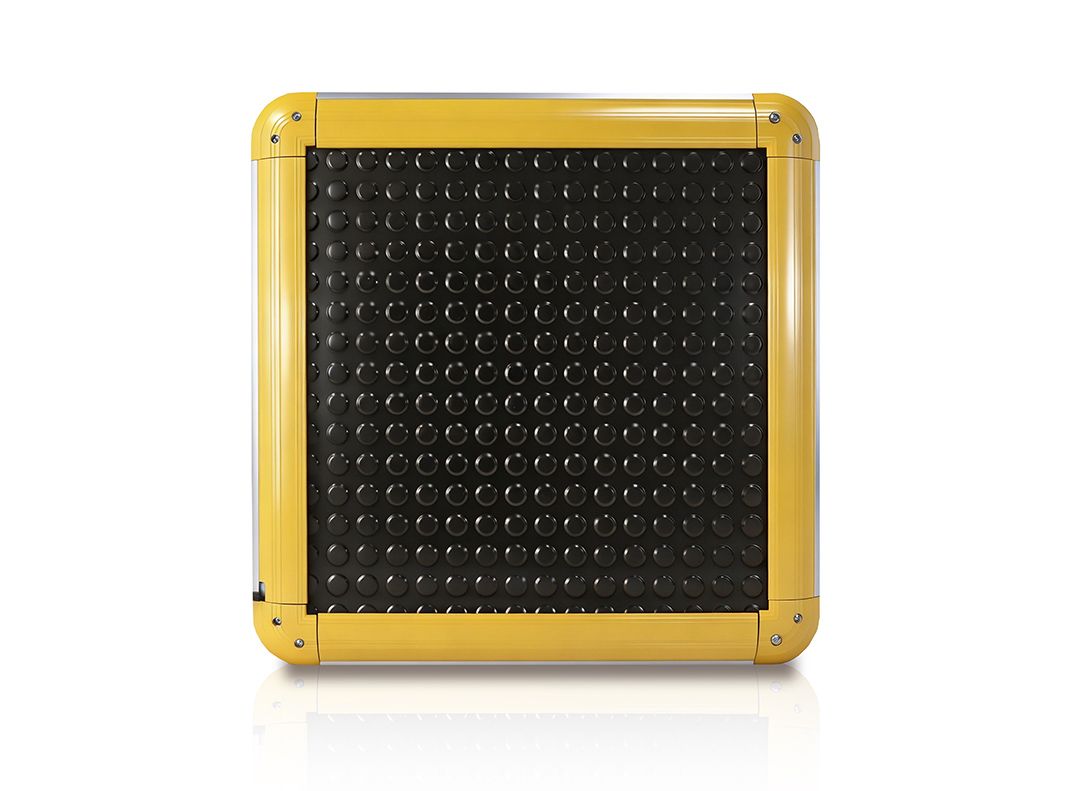
A Safety Protection Mat is a pressure-sensitive safety device designed to detect personnel within a predefined floor area.
When an operator steps onto the sensing surface and applies sufficient pressure, the internal sensing structure changes state and generates a switching signal. When connected to a suitable safety controller, the system can monitor the mat and interface its signal with the machine's safety circuit.
This approach is particularly valuable where operators need regular access to machinery. Instead of permanently restricting access with physical guarding, a Safety Protection Mat can create a monitored safety zone around the equipment.
The SC4 series documented in the provided Moncee product catalog is designed for industrial safety applications involving automated equipment, robots, welding machinery, assembly equipment, material handling systems, packaging machinery, and other industrial equipment.
Where Are Safety Protection Mats Used?
The commercial value of a Safety Protection Mat becomes clearer when looking at its applications.
Autom
Customization: Why One Standard Mat May Not Be Enough
Machine builders rarely work with identical floor layouts. Equipment dimensions, operator access points, safety distances, and installation structures can vary significantly from one project to another.
For this reason, customization is an important part of a Safety Protection Mat solution.
The standard SC4 configuration supports multiple dimensions, including 500 × 500 mm, 1000 × 500 mm, 1000 × 750 mm, 1000 × 1000 mm, 1500 × 1000 mm, and 2000 × 1000 mm. The catalog also indicates that other dimensions can be customized within the specified range.
Customization may involve:
Mat length and width
Material selection
Cable length
Edge profile
Edge color
Installation configuration
Load requirements
Waterproof or specialized construction
The catalog provides several edge options, including yellow and coffee-colored configurations, with different edge profiles available for standard and high-performance mats.
For OEM customers, this flexibility can reduce the need to redesign machine structures simply to accommodate an off-the-shelf safety mat.
ated Industrial Machinery
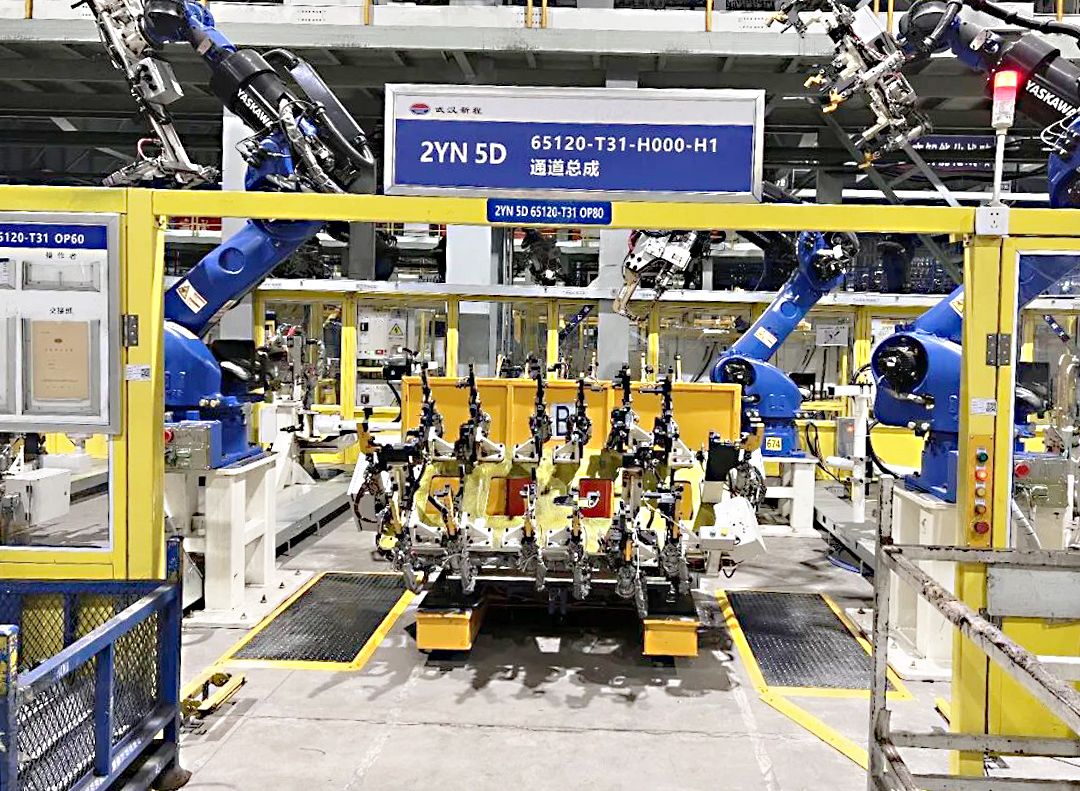
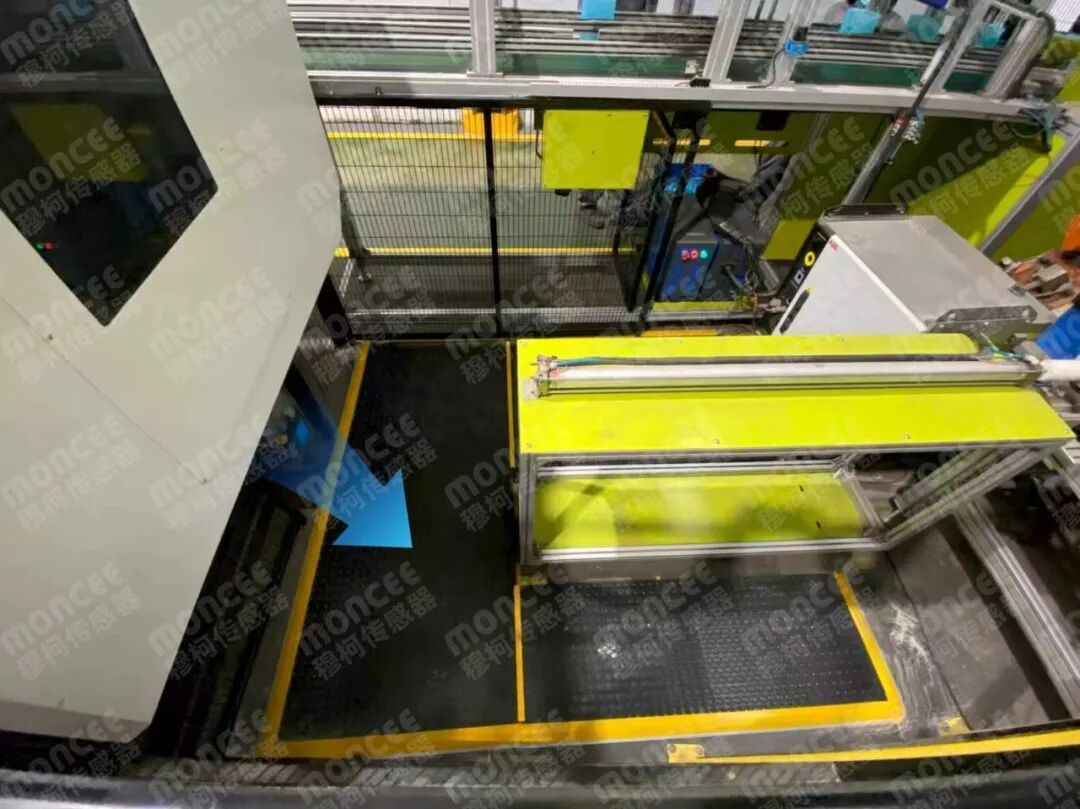
Safety mats can be installed around automated equipment to detect whether an operator enters a designated area. This can be particularly useful when routine production, inspection, adjustment, or material handling requires personnel to work near moving mechanisms.
The catalog includes installation examples around industrial machinery and shows Safety Protection Mat applications as personnel-presence detection zones.
Industrial Robots
Robot cells often require controlled access around moving equipment. A Safety Protection Mat can be positioned in accessible areas where personnel may approach the robot.
For integrators, this makes the mat a potentially useful component when designing a complete machine safeguarding system rather than relying on a single protective technology.
Material Handling and Forklift Applications
Not every safety mat needs to serve the same mechanical environment.
The SC4 product family includes a dedicated forklift safety mat, with a PUR construction and application-specific design. Its specifications indicate customizable dimensions, a 30 kg adult trigger force, and a response time of ≤30 ms.
This type of product differentiation is important for industrial buyers because a mat exposed to vehicle traffic may have substantially different requirements from one installed beside a small machine.
Car Wash and Wet Environments
Water exposure creates additional requirements for safety equipment.
The catalog includes a dedicated car wash machine safety mat, specified at 800 × 200 mm, with a PUR surface material and a response time of ≤30 ms.
For applications involving water or frequent cleaning, buyers should pay particular attention to protection ratings and material compatibility.
Other Specialized Applications
The product portfolio also includes waterproof safety mats, waterproof dual-control safety mats, seat safety mats, armored safety mats, and other specialized configurations.
For B2B buyers, this is an important distinction: industrial safety mat sourcing should begin with the application rather than the product name alone.
Customization: Why One Standard Mat May Not Be Enough
Machine builders rarely work with identical floor layouts. Equipment dimensions, operator access points, safety distances, and installation structures can vary significantly from one project to another.
For this reason, customization is an important part of a Safety Protection Mat solution.
The standard SC4 configuration supports multiple dimensions, including 500 × 500 mm, 1000 × 500 mm, 1000 × 750 mm, 1000 × 1000 mm, 1500 × 1000 mm, and 2000 × 1000 mm. The catalog also indicates that other dimensions can be customized within the specified range.
Customization may involve:
Mat length and width
Material selection
Cable length
Edge profile
Edge color
Installation configuration
Load requirements
Waterproof or specialized construction
The catalog provides several edge options, including yellow and coffee-colored configurations, with different edge profiles available for standard and high-performance mats.
For OEM customers, this flexibility can reduce the need to redesign machine structures simply to accommodate an off-the-shelf safety mat.
Key Specifications for Industrial Safety Protection Mat Selection
When sourcing a Safety Protection Mat, several technical parameters should be evaluated together.
Load Capacity
Load requirements depend on the application.
The standard SC4 model specifies a dynamic load of 500 kg and a static load of 800 kg, with an adult trigger force of approximately 30 kg.
The high-performance version uses PUR material and is specified for a wheel-load condition of 2000 N / 1862 kPa, making it more suitable for applications with demanding mechanical loads.
Environmental Conditions
Standard models are documented for an operating temperature range of approximately -10°C to +60°C, while specialized versions have their own specified ranges.
Material selection should also consider exposure to oil, chemicals, cleaning fluids, and other substances. The catalog describes resistance characteristics against substances including gasoline, diesel, hydraulic oil, and cutting oil for relevant models.
Protection Rating
For wet or contamination-prone environments, protection rating is particularly important.
The standard safety mat is documented at IP65, while waterproof models are specified at IP67.
Response Time and Service Life
The documented standard and specialized safety mats specify response times of ≤30 ms, while several models are designed for working lives exceeding hundreds of thousands of operations.
These parameters should be evaluated as part of the complete machine safety design rather than considered independently.
Safety Mat Controller Integration
A Safety Protection Mat is generally most useful when integrated into a properly designed safety control system.
The Moncee catalog includes a dedicated safety mat controller using DC24V power. The controller provides dedicated input and relay-output circuits and has a documented response time of ≤20 ms.
The catalog also provides wiring examples for four-core safety mats and multi-mat configurations.
For an OEM or system integrator, this means sourcing should not stop at the mat itself. The complete solution may need to consider:
Safety mat + controller + wiring + edge profile + machine safety circuit + installation structure.
This system-level approach is often more valuable than comparing individual mat prices.
Sourcing a Safety Protection Mat: What Should B2B Buyers Consider?
For industrial purchasing teams, price is only one part of supplier evaluation.
A capable supplier should be able to provide:
1. Application-Based Selection
The supplier should understand the machine, hazard, operating environment, and expected loading conditions rather than simply recommending the most common model.
2. OEM Customization
For equipment manufacturers, the ability to customize dimensions, cables, edge structures, materials, and configurations can simplify machine integration.
3. Complete Technical Documentation
A professional supplier should provide dimensional drawings, technical specifications, wiring information, installation guidance, and maintenance instructions.
4. Relevant Certifications
The provided catalog displays CE certification, EN ISO 13856 certification, and EN ISO 13849-related certification documentation.
For international projects, buyers should verify that the documentation and certification correspond to the exact product configuration being supplied.
5. Long-Term Supply Capability
For OEMs and distributors, supplier stability matters. Consistent specifications, repeatable quality, customization capability, and technical support can have a greater impact on total procurement cost than the initial unit price.
Safety Protection Mat as a Business Solution
For industrial buyers, the value of a Safety Protection Mat should be evaluated beyond its purchase price.
A suitable solution can help manufacturers:
Integrate personnel detection into automated machinery
Protect accessible hazardous zones
Support more flexible operator access
Adapt safety protection to different machine layouts
Reduce the engineering burden associated with non-standard installations
Build standardized safety solutions across different equipment models
For OEM machine manufacturers in particular, working with a supplier capable of providing both standard and customized Safety Protection Mat configurations can make it easier to develop repeatable safety architectures across multiple machine models.
Final Thoughts
A Safety Protection Mat is not simply a pressure-sensitive floor product. In industrial applications, it is a component of a broader machine safety solution that combines sensing, control, installation, and machine-level safety functions.
The SC4 product portfolio demonstrates how Safety Protection Mat solutions can be adapted for different requirements, including standard industrial machinery, high-load environments, waterproof applications, forklift areas, car wash equipment, seat applications, and armored configurations.
For OEMs, distributors, machine builders, and automation integrators, the best sourcing strategy is to evaluate the complete application first and then select the appropriate mat, material, dimensions, edge configuration, controller, and connection method.
When requesting a quotation, provide the supplier with the machine type, protected-area dimensions, expected load, operating temperature, environmental exposure, installation conditions, and control requirements.
The more complete the application information, the easier it is to develop a Safety Protection Mat solution that is technically appropriate, commercially practical, and suitable for long-term industrial deployment.
Product specifications in this article are based on the provided Moncee SC4 Safety Mat product catalog. Specifications may vary between models and configurations. Final technical selection should always be confirmed against the applicable product documentation.



 English
 简体中文
简体中文 Indonesian
 Previous:
 Back to list


