
As industrial automation expands, LiDAR is increasingly being considered for machine protection, mobile robot obstacle detection, automated logistics, and industrial area monitoring. However, choosing a Safety LiDAR is not simply a matter of selecting the model with the longest detection range or the highest number of scanning points.
For industrial buyers, the more important question is: Can the LiDAR reliably perform the required detection task and integrate with the existing equipment and control system?
A suitable solution must match the application's detection range, scanning coverage, response requirements, protective-field configuration, environmental conditions, communication architecture, and installation constraints. This guide explains the most important factors to evaluate when selecting a Safety LiDAR for an industrial project.
1. Start with the Application, Not the Product Model
The first step in selecting a Safety LiDAR is to define what needs to be detected and what the sensor is expected to do after detection.
Different applications have substantially different requirements.
For example:
AGVs and AMRs require obstacle detection while moving.
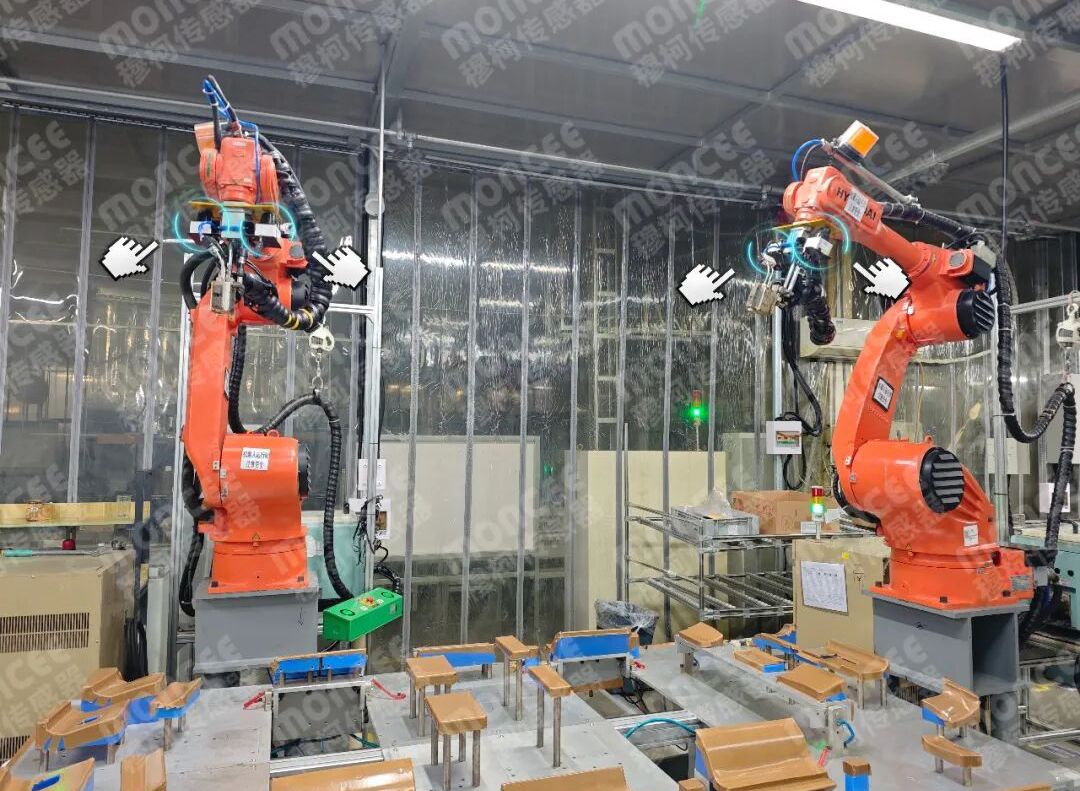
Industrial robots may require monitoring around a working cell.
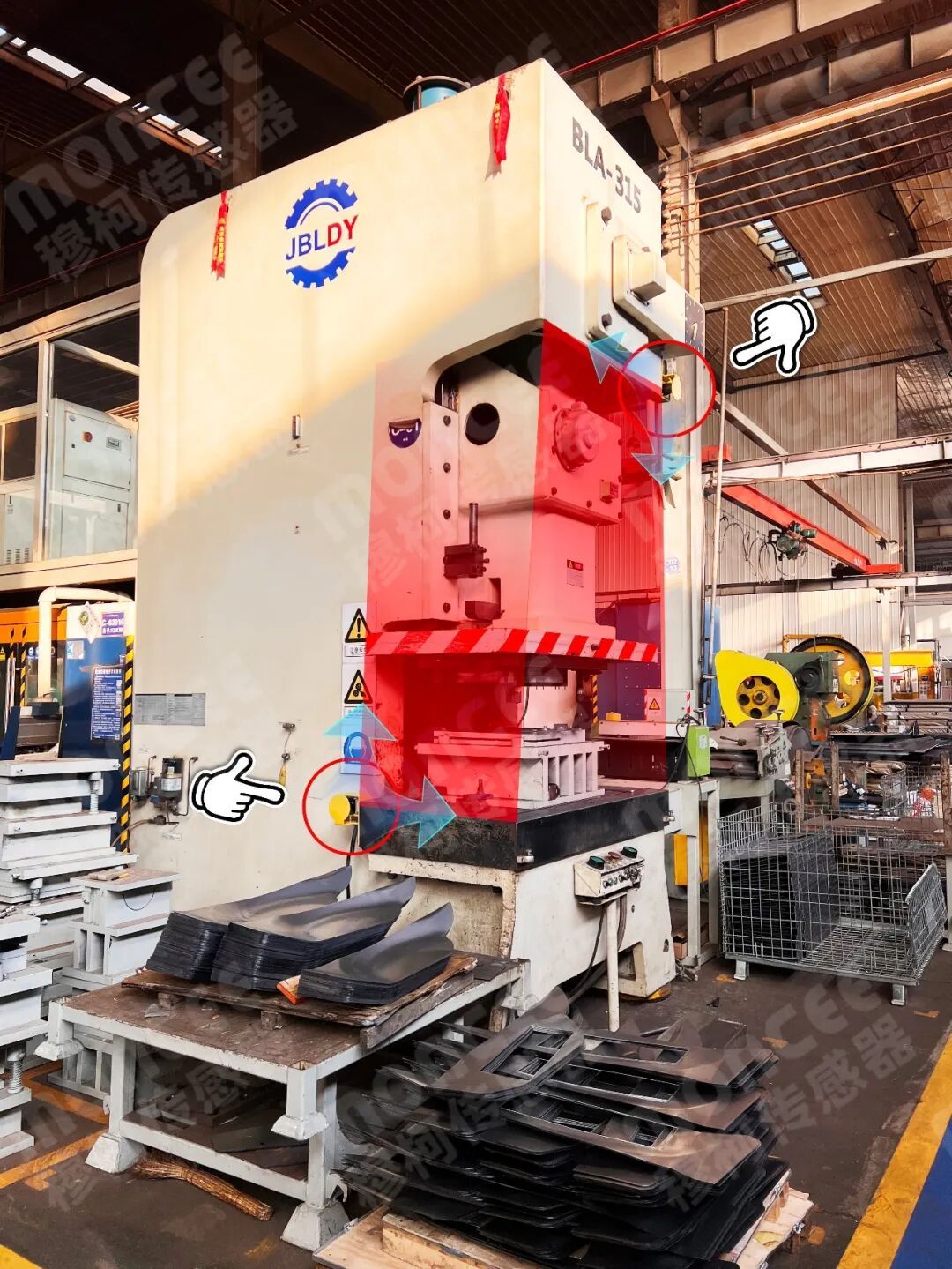
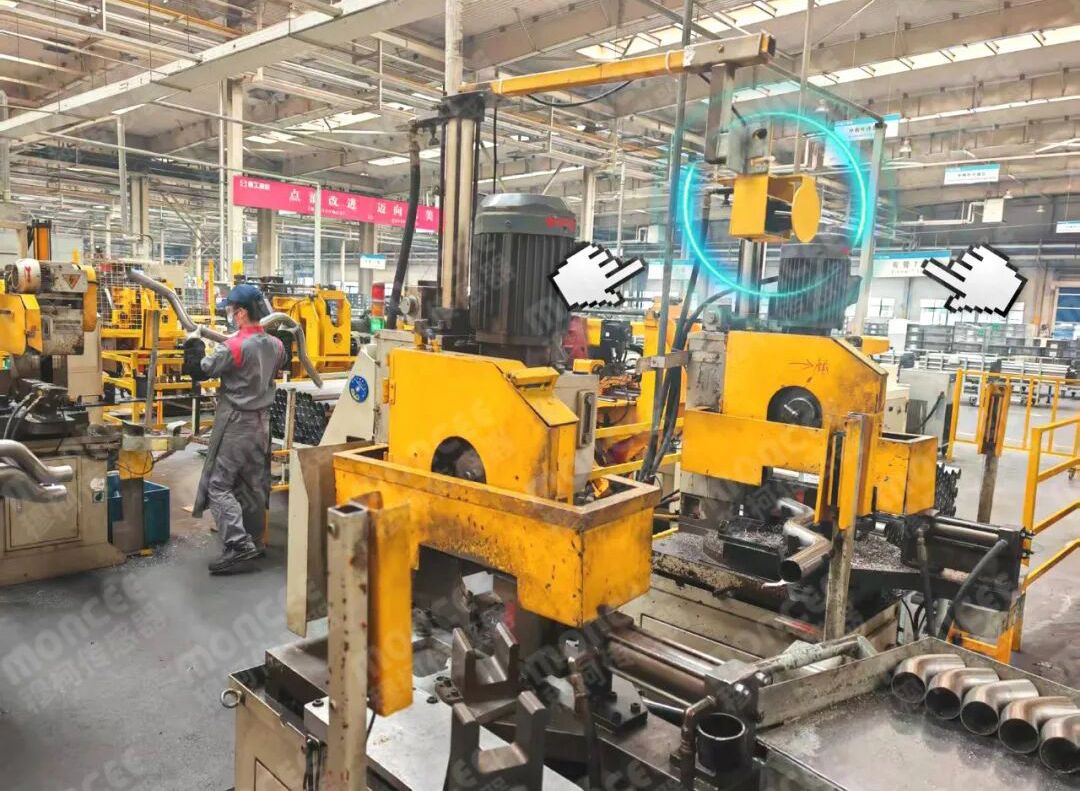
Automated machinery may need configurable detection zones around moving mechanisms.
Logistics systems may require monitoring of vehicle routes and restricted areas.
Industrial facilities may need continuous detection across a defined area.
The MILS-F30 is designed as an industrial laser scanning sensor with both navigation and obstacle-avoidance functions. It can perform area detection and protection across a 270° field of view, with a maximum range of 50 m.
Therefore, before requesting a quotation, buyers should clearly define the application scenario, detection target, equipment movement, required coverage, and expected control response.
This initial assessment can prevent a common purchasing mistake: selecting a sensor according to its headline specifications rather than its actual suitability for the project.
2. Evaluate Detection Range Based on Real Operating Conditions
Detection range is one of the first specifications buyers usually compare.
The MILS-F30 provides a maximum detection distance of 50 m, while its specified detection distance at 10% reflectivity is 20 m. Its measurement accuracy is approximately ±2 cm under the documented test conditions.
However, maximum range should not be treated as the actual safety distance required by a machine or mobile robot.
For an AGV, for example, the required detection distance should be evaluated together with:
Vehicle speed + braking distance + sensor response + controller response + required safety margin
A faster vehicle may require significantly more detection distance than a slower vehicle, even if both operate in the same facility.
Buyers should therefore ask suppliers for application-specific performance data, rather than selecting a product simply because it has a larger advertised maximum range.
3. Check the Scanning Field and Potential Blind Areas
A Safety LiDAR's field of view determines how much of the surrounding area can be monitored.
The MILS-F30 provides a 270° scanning angle and a default angular resolution of 0.25°.
A wide field of view can be particularly useful for mobile equipment because it can cover the front and side areas of the vehicle.
However, the nominal scanning angle is only part of the installation assessment.
Before purchasing, consider:
Where will the sensor be mounted?
Will the machine structure block part of the scanning field?
Are there corners or recessed areas that cannot be scanned?
Is the detection plane positioned at the appropriate height?
Could pallets, racks, cables, or other equipment create blind spots?
A technically capable LiDAR can still produce inadequate coverage if it is installed incorrectly.
For this reason, installation design should be considered together with sensor selection.
4. Pay Attention to Angular Resolution and Measurement Accuracy
Two specifications that are often overlooked by non-technical buyers are angular resolution and measurement accuracy.
The MILS-F30 uses a 0.25° angular resolution and specifies approximately ±2 cm measurement accuracy. Its documented resolution varies with distance: 5 mm below 3 m, 10 mm below 5 m, and 15 mm below 8 m.
Angular resolution affects how densely the scanning field is sampled. Measurement accuracy determines how closely the measured distance corresponds to the actual target position.
However, neither value should be evaluated independently.
For example, a buyer selecting a LiDAR for a mobile robot should consider the size of the obstacle, distance from the sensor, reflectivity of the target, vehicle speed, and required detection distance together.
The right question is therefore not simply:
“Which sensor has the highest resolution?”
It is:
“Does the sensor provide sufficient detection performance for the target and operating conditions of my application?”
5. Protective-Field Configuration Can Be More Important Than Range
For industrial area protection, configuration flexibility can directly affect the practicality of a LiDAR solution.
The MILS-F30 supports 16 area groups, with each group containing three configurable areas. Four digital inputs can be used to switch between the 16 area groups.
Each area group can contain:
Outer area
Middle area
Inner area
The configuration software also supports different area shapes, including rectangles, sectors, and polygons, allowing the detection field to follow the actual geometry of an industrial installation.
This capability is particularly relevant for machines with different operating states.
For example, a machine may have different spatial requirements during production, setup, maintenance, or material loading. Rather than physically changing the sensor installation, the appropriate preconfigured area group can be selected.
For buyers, this means that the question should not only be:
“How far can the LiDAR detect?”
It should also be:
“How flexibly can I configure the area I actually need to monitor?”
6. Consider Response Time as Part of the Complete Control Chain
A LiDAR's response performance should be considered together with the complete machine-control system.
According to the MILS-F30 documentation, the initial area-detection response time is approximately 66 ms. The sensor also provides area-trigger information, including the trigger status and minimum trigger distance for the outer, middle, and inner areas.
However, sensor response is only one part of the overall response chain.
The actual system response may include:
Object detection → LiDAR processing → output transmission → PLC/controller processing → machine response → mechanical stopping
Therefore, when evaluating a Safety LiDAR for a machine or mobile robot, procurement teams should ask the supplier to clarify how the sensor's response parameters relate to the complete system response.
This is particularly important for applications where stopping distance is critical.
7. Verify Environmental Compatibility
Industrial equipment rarely operates under laboratory conditions.
Dust, moisture, temperature changes, strong lighting, rain, fog, and snow can all affect sensing equipment depending on the technology and product design.
The MILS-F30 is specified with an IP65 protection rating, an operating temperature range of -25°C to +55°C, and ambient-light resistance up to 80,000 lux. It uses a Class 1, 905 nm laser and incorporates temperature-control and sealed-design features.
The supplier documentation also describes the F30 as suitable for both indoor and outdoor operation and highlights its intelligent multi-echo technology for demanding weather conditions.
Nevertheless, procurement teams should always compare these specifications with the actual site conditions rather than assuming that an IP rating alone guarantees suitability.
8. Integration Capability Matters in Commercial Projects
A LiDAR may have excellent sensing performance but still be difficult to deploy if it cannot communicate effectively with the customer's existing control architecture.
MILS-F30 supports Ethernet and Type-C for parameter configuration and data communication. It also supports communication through network or Type-C connections.
The sensor can provide not only scanning data but also area-detection information. In active transmission mode, it can automatically output data according to the configured transmission interval; in passive mode, data can be requested through a synchronization command.
For an industrial procurement project, it is therefore worth confirming:
Available communication interfaces
Communication protocols
Data format
Digital input/output requirements
PLC compatibility
Robot-controller compatibility
Configuration software
Parameter backup and deployment procedures
The F30 software provides an area import/export function, allowing an established configuration to be saved and transferred to newly installed units.
For OEMs and system integrators, this can be valuable when multiple machines use the same sensing architecture.
9. 2D LiDAR or 3D ToF: Which Should You Buy?
Another important purchasing decision is whether the project actually requires 2D or 3D sensing.
The MILS-F30 is a 2D laser scanning sensor designed for navigation, obstacle avoidance, and area detection. Its strengths include wide-angle scanning and relatively long detection distance.
The MZS-01, by comparison, uses ToF technology for 3D sensing, with a 0.2–5 m working range, 70° × 50° FOV, 640 × 480 resolution, 20–25 fps frame rate, and IP67 protection.
MZS-01 is therefore positioned toward applications requiring three-dimensional spatial perception rather than simply long-distance planar scanning.
A practical decision can be made as follows:
Long-range 2D environmental perception and obstacle avoidance
→ Consider a 2D LiDAR such as MILS-F30.
Close-range 3D spatial detection
→ Consider a 3D ToF sensor such as MZS-01.
The best technology depends on the actual detection geometry rather than the popularity of a particular sensor category.
10. Evaluate the Supplier, Not Just the Sensor
For B2B industrial procurement, selecting the product is only half of the decision.
A professional supplier should be able to provide information covering:
Technical specifications
Installation requirements
Communication protocols
Configuration software
Application guidance
Sample testing
OEM/ODM requirements
Product customization
Technical support
Documentation and certifications
Production and delivery capability
This becomes particularly important when the LiDAR will be integrated into AGVs, AMRs, industrial robots, automated machinery, or an OEM product.
Before placing a bulk order, it is advisable to request a sample or pilot evaluation and test the sensor under conditions that resemble the final application.
Conclusion: Choose According to the Project, Not the Datasheet
Choosing the right Safety LiDAR requires a complete evaluation of the application rather than a simple comparison of specifications.
The most important questions are:
What needs to be detected?
How far away must it be detected?
What scanning field is required?
What level of resolution and accuracy is appropriate?
How many protective fields are required?
How quickly must the system respond?
What environmental conditions will the sensor face?
How will it communicate with the customer's control system?
Does the application require 2D or 3D sensing?
Can the supplier provide adequate technical and commercial support?
For applications involving AGV/AMR obstacle avoidance, industrial robot protection, machine-area monitoring, and automated logistics, MILS-F30 offers a combination of 270° scanning, up to 50 m maximum detection distance, configurable multi-zone detection, Ethernet/Type-C connectivity, and industrial environmental specifications.
For buyers evaluating a Safety LiDAR for a new automation project, the most effective next step is not simply requesting a price. Provide the supplier with the equipment type, installation height, operating speed, required detection area, environmental conditions, controller/interface requirements, and expected annual quantity. A technically capable manufacturer can then recommend a configuration based on the actual project rather than offering a generic sensor model.
That approach turns Safety LiDAR procurement from a simple product-price comparison into a more reliable application-based engineering and sourcing decision.



 English
 简体中文
简体中文 Indonesian
 Previous:
 Back to list


