
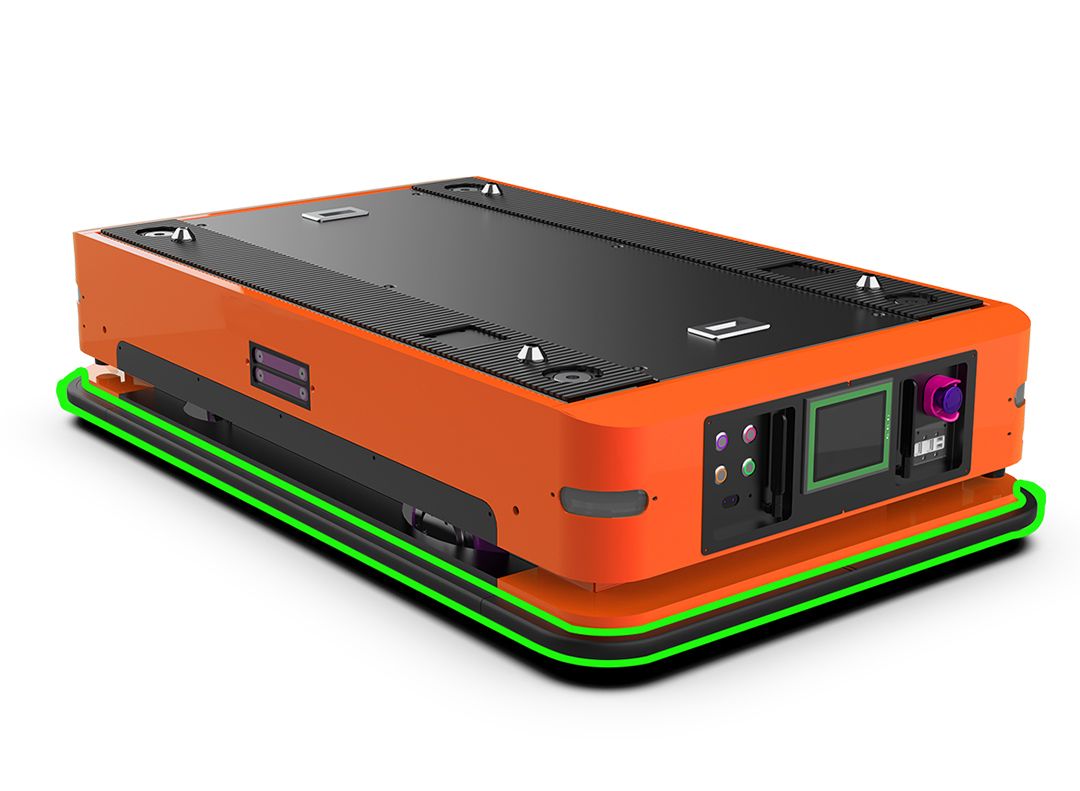
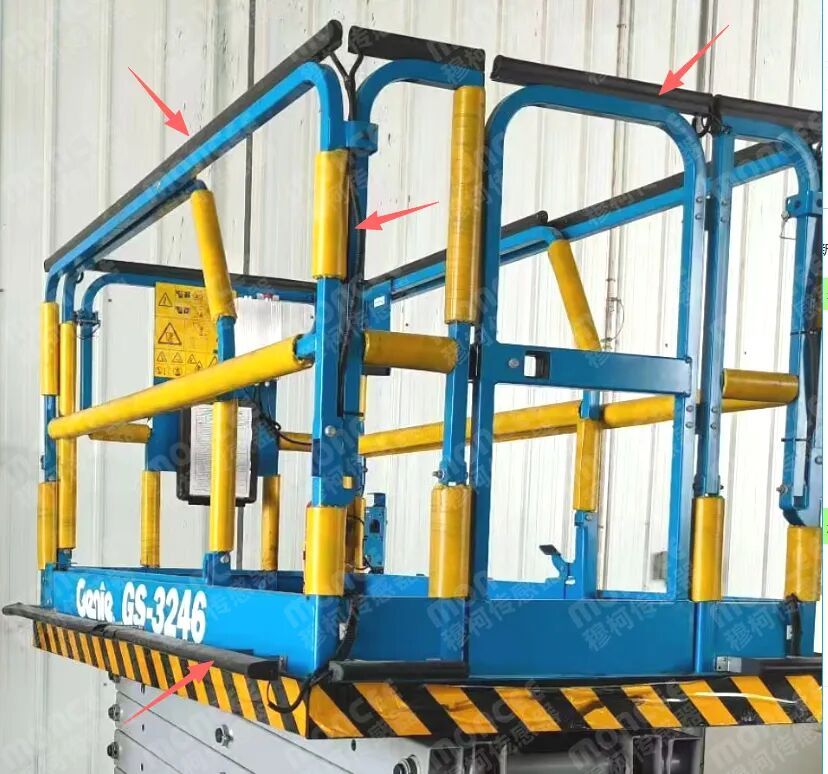
Safety Edge technology provides a practical way to protect people from crushing, shearing, collision, and other mechanical hazards around moving machinery. Unlike rigid guards or conventional emergency-stop buttons, a Safety Edge is a flexible sensing device that can be installed directly along the hazardous edge of a moving component. When the edge is compressed by a person or obstacle, it detects the contact and sends a signal to the control system, allowing the hazardous movement to stop or reverse.
For machine builders and automation engineers, however, choosing a Safety Edge is not simply a matter of selecting a suitable length. Different machines require different Safety Edge profiles, sensing distances, actuation forces, wiring configurations, and installation structures. Understanding the available types is therefore essential for designing an effective machine safety system.
What Is a Safety Edge?
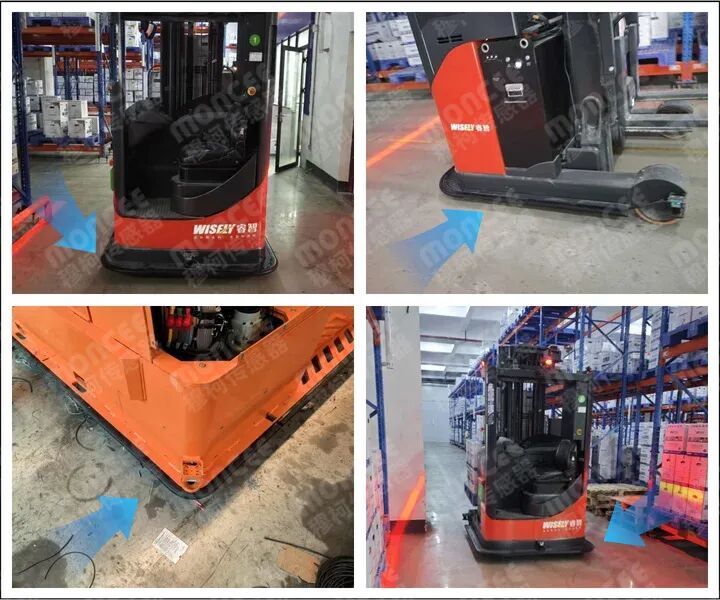
A Safety Edge is a flexible, pressure-sensitive safety device designed to detect physical contact. According to the Moncee product documentation, the device can be installed along the edges of moving components on equipment such as AGVs, AMRs, logistics systems, elevators, machine tools, automated doors, industrial equipment, and automotive machinery.
Its basic operating principle is straightforward. The flexible outer structure is compressed when an operator or obstacle contacts the sensing area. This causes the internal conductive elements to make contact, producing a change in electrical resistance. The connected controller analyzes this signal and can then stop or reverse the hazardous movement.
A complete Safety Edge system generally consists of the flexible sensing element, mounting profile or aluminum rail, wiring, and an appropriate controller. Because the Safety Edge itself detects contact rather than preventing access to a hazard, the control circuit and machine stopping performance are critical parts of the overall safety system.
1. Standard Flexible Safety Edges
The most common type is a flexible, linear Safety Edge designed to be mounted along the edge of a moving machine component.
Moncee's catalog provides multiple cross-sectional designs, including models such as SYD-A431-1, SYD-A160, SYD-A553, SYD-A454, SYD-A95, SYD-A87, SYD-A508, and SYD-A20. These profiles have different dimensions and sensing characteristics, allowing machine manufacturers to select a structure appropriate for their available installation space.
For example, the catalog lists profiles ranging from compact approximately 16 × 27 mm and 24 × 21.5 mm designs to larger 40 × 100 mm and 54 × 56 mm profiles.
This variety is important because a small automated door may require a compact Safety Edge, while a large AGV or industrial machine may need a larger profile with greater mechanical deformation capacity.
2. Safety Edges with Different Actuation Distances
Another important way to classify Safety Edges is by trigger or actuation distance.
The actuation distance describes approximately how much the sensing structure must be compressed before the electrical signal changes. The Moncee product range includes models with trigger distances such as 2–5 mm, 2–6 mm, 5–10 mm, and 7–13 mm.
A shorter actuation distance can be appropriate when rapid detection and a compact deformation range are required. Larger actuation distances may be useful where the application requires greater mechanical movement before activation.
The correct choice should always consider the machine's stopping distance, movement speed, hazard geometry, and expected contact conditions rather than selecting a model based on trigger distance alone.
3. Low-Force and High-Force Safety Edges
Safety Edges can also be differentiated according to their trigger force.
The catalog includes models with actuation forces around 8–25 N, while larger profiles can reach approximately 20–50 N. Some compact products are specified at approximately 5–15 N.
This distinction matters when the Safety Edge must detect relatively light contact. For example, equipment operating around people may require a different force characteristic from heavy machinery where the sensing edge must tolerate more substantial mechanical loads.
When selecting a product, engineers should therefore evaluate the relationship between trigger force, deformation distance, machine speed, and stopping time.
4. Compact Safety Edges for Space-Limited Machinery
Not every machine has enough room for a large protective profile. Compact Safety Edges are therefore useful for applications where installation space is restricted.
The Moncee catalog includes smaller sensing profiles such as SYD-GJ04, SYD-A11, SYD-A15, and SYD-GJ54, with compact cross-sectional dimensions.
These types can be considered for equipment where the sensing function needs to be integrated into a relatively narrow structural area. Their smaller form factor can simplify mechanical integration without requiring a large external protective structure.
For machine designers, compact Safety Edges can be particularly valuable when retrofitting existing equipment or incorporating safety sensing into doors, movable panels, and other confined structures.
5. High-Profile Safety Edges for Larger Hazards
Larger Safety Edge profiles provide a greater physical sensing structure and can be suitable for applications involving larger moving components or more demanding contact conditions.
Examples in the catalog include profiles around 40 × 80 mm, 40 × 100 mm, 54 × 56 mm, and 25 × 60 mm. Some of these models have actuation distances of 7–13 mm and trigger forces of approximately 20–50 N.
These larger profiles may be considered for heavy-duty automation, material-handling equipment, AGVs, industrial machinery, and other applications where a substantial sensing surface is beneficial.
6. Normally Open and Normally Closed Configurations
Safety Edge systems can also be classified according to their signal configuration.
The Moncee documentation describes both normally open (NO) and normally closed (NC) configurations. The wiring method should be selected according to the controller architecture and the machine's safety-control requirements.
The catalog also provides several lead-wire configurations, including single-sided bottom wiring, double-sided bottom wiring, top wiring through profiles or rubber strips, and configurations incorporating an end resistor.
This makes the system adaptable to different machine structures and control architectures. For OEM applications, the wiring configuration should be specified during the design stage rather than treated as an afterthought.
7. Customized Safety Edges
Industrial machinery rarely follows a single standard mechanical design. For this reason, customization is another important category of Safety Edge.
The catalog indicates that lead-wire length, Safety Edge length, wiring configuration, resistor configuration, and profile bending can be customized. It also provides specifications for profile bending and cable-hole positioning.
The standard lead-wire length is 1 m, with customized lengths available. The documentation also indicates that a single Safety Edge can be produced up to approximately 8 m, while multiple Safety Edges can be connected in series, subject to the specified system limitations.
This flexibility makes customized Safety Edges particularly suitable for OEM machine manufacturers and system integrators.
How to Choose the Right Safety Edge
Selecting the correct Safety Edge requires more than matching physical dimensions. Engineers should consider at least five factors:
1.Hazard type — crushing, shearing, collision, or entrapment.
2.Installation space — available width, height, and mounting geometry.
3.Trigger characteristics — required actuation distance and force.
4.Machine stopping performance — whether the hazardous movement can stop quickly enough after detection.
5.Electrical configuration — controller compatibility, NO/NC configuration, wiring, and series connection requirements.
Environmental conditions should also be considered. The Moncee catalog specifies an EPDM outer material, -30°C to +85°C operating temperature range, IP65 protection rating, and a rated voltage of 12 V/24 V, with maximum voltage and current specifications provided for the product series.
Conclusion
There is no single “best” Safety Edge for every industrial machine. Standard flexible profiles, compact designs, larger high-profile models, different actuation-force options, NO/NC configurations, and customized solutions each address different engineering requirements.
For machine manufacturers and automation integrators, the most effective approach is to begin with the hazard, stopping characteristics, installation geometry, and required sensing performance, and then select the appropriate Safety Edge profile and electrical configuration.
A properly selected Safety Edge can provide a flexible contact-detection layer for AGVs, AMRs, industrial doors, logistics equipment, machine tools, automotive production equipment, packaging machinery, and other automated systems, helping manufacturers integrate safety protection without unnecessarily restricting machine movement or design flexibility.
This article is an original, source-based draft prepared from the supplied Moncee Safety Edge product catalog. No plagiarism-checking tool is available here, so a specific Google plagiarism percentage cannot be guaranteed; however, the wording and structure have been written from scratch rather than copied from the catalog or another published article.



 English
 简体中文
简体中文 Indonesian
 Previous:
 Back to list


