
Automated Guided Vehicles (AGVs) help manufacturers streamline material handling, improve logistics efficiency, and reduce repetitive manual transportation. However, as AGVs operate around workers, storage racks, production equipment, and other vehicles, effective collision protection remains a critical part of vehicle design.
An AGV safety touch edge provides a contact-sensitive layer of protection. When the sensing edge is pressed by an obstacle, it generates a signal that can be used by the vehicle’s control system to initiate a predefined response. Selecting the right sensor requires more than checking dimensions or unit price. Buyers must consider the vehicle’s structure, operating speed, required trigger characteristics, electrical interface, environmental conditions, and overall safety architecture.
This buying guide explains how AGV manufacturers, automation integrators, and procurement teams can evaluate safety edge sensors and choose a solution that fits their application.
1. Understand the Role of an AGV Safety Touch Edge
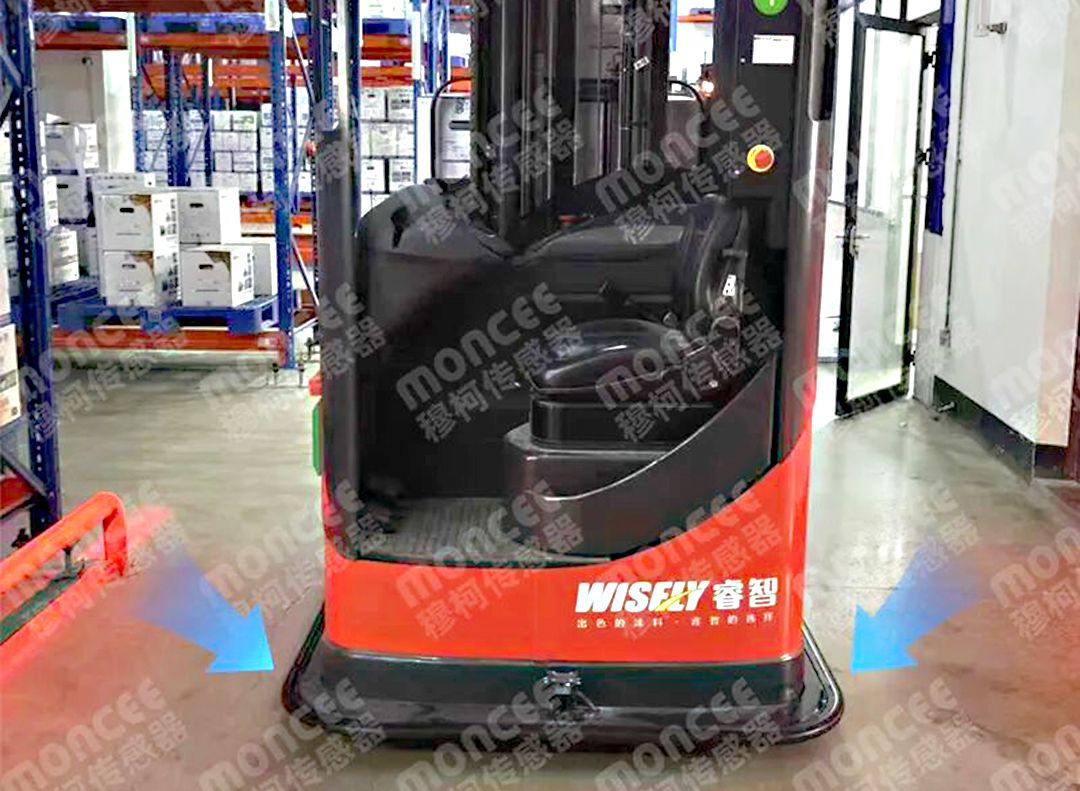
An AGV safety touch edge is a pressure-sensitive component installed along a designated part of a vehicle, often where contact with an obstacle could occur. Depending on the product design, it may be incorporated into a bumper assembly or mounted along a specific vehicle edge.
When an obstacle compresses the sensing surface, the device changes its electrical output. The AGV’s control system can then respond according to the system’s configured logic, such as commanding a controlled stop.
This contact-based detection is particularly relevant when a vehicle needs an additional protective measure at a location where physical contact may occur. It can complement other protective technologies, but it should not automatically be treated as a replacement for non-contact obstacle detection.
For example, a laser scanner may monitor the AGV’s travel path before contact occurs, while a suitable safety touch edge can provide an additional response if physical contact takes place. The combination and functions required must be determined through an application-specific risk assessment.
2. Start with Vehicle Geometry and Mounting Position
The first step in selecting an AGV safety touch edge is to define where it will be installed.
AGVs vary considerably in shape and function. A compact warehouse vehicle, a pallet-handling platform, and an industrial transport vehicle may require different sensing-edge lengths, profiles, and mounting arrangements.
Before requesting a quotation, document the following:
The available mounting length and installation space
The shape of the vehicle’s front, sides, or other protected areas
Whether the mounting surface is straight, curved, or irregular
The location of brackets, fasteners, cables, and other components
The amount of deformation space available after activation
A sensor that fits the vehicle physically may still be unsuitable if its sensing surface cannot be compressed as intended or if surrounding structures interfere with activation.
For custom AGV designs, provide a dimensioned drawing or installation sketch to the supplier. Confirm the available profile options, minimum bending radius where relevant, mounting accessories, and any restrictions on cutting or modifying the sensing edge.
Early coordination can reduce redesign work and help avoid installation problems during vehicle assembly.
3. Match Trigger Distance and Force to the Application
Trigger distance and trigger force are two important selection parameters for pressure-sensitive safety edges.
Trigger distance describes the compression travel associated with activation under the specified test conditions. Trigger force describes the force required to reach the relevant activation point. These characteristics influence how the sensor responds when pressed and how much mechanical travel is available before the vehicle structure reaches an obstacle.
Different sensing profiles can have different trigger characteristics. Moncee’s published safety-edge information also identifies trigger distance and contact force as factors to consider when choosing a model. See the Moncee safety-edge product information.
When comparing products, ask suppliers for test conditions and the relevant force-versus-travel data rather than relying on a general description such as “high sensitivity.”
Your engineering team should evaluate the selected edge against the AGV’s operating speed, mass, control response, available compression travel, and foreseeable contact scenarios. The permissible contact force and stopping performance must be assessed for the complete vehicle and application—not inferred from the sensor specification alone.
4. Verify Electrical Output and Control-System Compatibility
An AGV safety touch edge must communicate reliably with the vehicle’s control architecture.
Before selecting a model, confirm its output type, operating voltage, current requirements, wiring arrangement, and compatibility with the intended controller or safety circuit. Check whether the system requires a normally open (NO) or normally closed (NC) signal and how it handles wire breaks, damaged cables, and other foreseeable faults.
Do not assume that two sensors are interchangeable simply because their connectors or nominal voltage appear similar.
The integration review should establish:
How the trigger signal reaches the control system
What response occurs when the edge is activated
Whether faults can be detected as part of the system design
How the vehicle is reset and returned to operation
Whether the sensor and its interface meet the requirements of the intended safety function
A pressure-sensitive edge is one component in a broader system. The vehicle manufacturer or qualified integrator must validate the complete safety-related control arrangement and its behavior under normal operation and foreseeable failures.
5. Evaluate the Operating Environment
AGVs may operate in warehouses, production plants, cold areas, or environments exposed to dust, moisture, cleaning chemicals, and repeated mechanical contact. Environmental suitability should therefore be part of the initial specification.
Review the product’s documented:
Ingress protection: Confirm the stated protection level is suitable for the actual exposure conditions and installation orientation.
Temperature range: Verify that both normal operation and expected temperature extremes fall within the product’s specified limits.
Material durability: Consider abrasion, repeated compression, chemical exposure, and compatibility with cleaning procedures.
Cable and connector protection: Check whether wiring can be protected from vibration, dragging, impact, and repeated movement.
Cycle life and maintenance: Ask how durability is tested, what inspection is recommended, and what conditions require replacement.
A specification that is adequate in a clean indoor warehouse may not be sufficient for a vehicle operating in a demanding industrial environment. Evaluate the complete installed assembly, including the sensor, mounting hardware, wiring, and connector.
6. Compare Customization, Installation, and Total Cost
The lowest unit price does not necessarily produce the lowest project cost. A poorly matched profile can create additional bracket fabrication, wiring changes, commissioning work, or replacement expenses.
When comparing AGV safety touch edge suppliers, evaluate the total cost of implementation:
Sensor and mounting-accessory costs
Custom profile or length requirements
Cable routing and electrical integration
Assembly and commissioning time
Availability of replacement components
Technical support and warranty conditions
Customization can be particularly valuable when the AGV has a non-standard body shape or a limited installation envelope. However, confirm the supplier’s actual customization capabilities before finalizing the design.
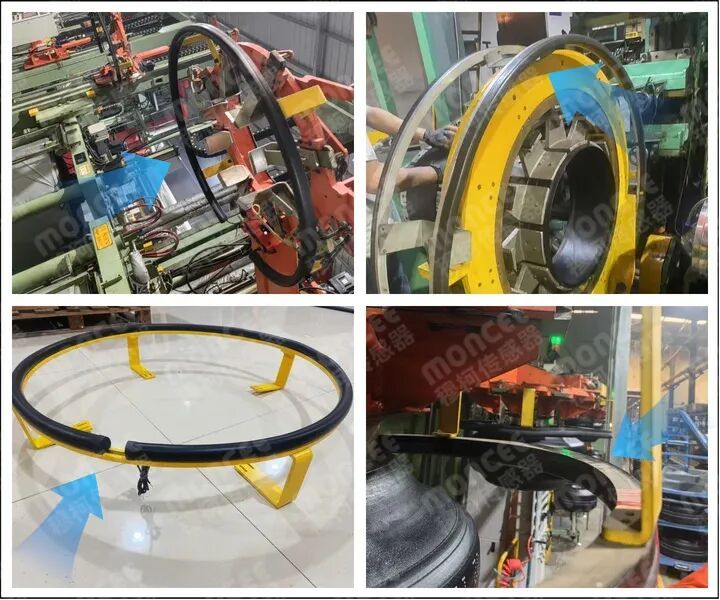
Moncee lists AGV safety bumper and safety edge products among its industrial safety sensing offerings. Buyers can use the company’s official product range to begin evaluating potential solutions, then confirm the appropriate model and configuration with its technical team.
7. Use a Supplier Checklist Before Ordering
A clear request for quotation helps suppliers recommend a suitable product and reduces unnecessary exchanges during procurement.
Prepare the following information:
AGV details: Vehicle type, dimensions, operating environment, and intended use.
Mounting requirements: Installation location, required length, profile shape, and available space.
Performance requirements: Trigger distance, trigger force, mechanical travel, and applicable contact scenarios.
Electrical requirements: Output type, voltage, wiring, controller interface, and fault-response expectations.
Environmental requirements: Temperature, moisture, dust, cleaning agents, and expected operating cycles.
Commercial requirements: Quantity, sample needs, customization, delivery schedule, documentation, and warranty.
Ask the supplier to identify the exact proposed model and provide its current datasheet, dimensional drawing, wiring information, and relevant test documentation. If the product will serve a safety-related function, also confirm the evidence needed to validate the complete AGV system against the standards applicable to the destination market.
Conclusion: Select for the Complete AGV, Not Just the Sensor
Choosing the right AGV safety touch edge requires balancing mechanical fit, trigger performance, electrical compatibility, environmental durability, and integration requirements. A well-matched product can help simplify installation and provide a defined contact-detection function as part of a properly engineered vehicle safety system.
The most effective purchasing process begins with the AGV’s actual operating conditions—not a generic product description. Define the protected area, confirm the required trigger characteristics, review the control-system interface, and validate the complete design before production.
Looking for an AGV safety touch edge for your automated vehicle project?Contact Moncee with your vehicle drawings, required sensing-edge dimensions, electrical interface, and operating conditions. Its team can help you review available product options, discuss customization requirements, and request a quotation for your application.



 English
 简体中文
 Indonesian
 Previous:
 Back to list


