
In industrial environments, hazardous areas are not always separated by walls, doors, or fixed barriers. Many machines require operators to work directly beside moving mechanisms, automated systems, robots, conveyors, or other potentially hazardous equipment. In these situations, controlling access to the danger zone becomes an important part of machine safety design.
A Protective Safety Mat provides a practical way to monitor defined floor areas around industrial machinery. Installed on the floor where personnel may enter or stand, the pressure-sensitive mat detects the presence of a person through applied pressure and provides a switching signal to the machine safety system.
For OEM machine builders, automation integrators, and industrial equipment manufacturers, the value of a Protective Safety Mat is not simply the mat itself. The real benefit comes from selecting the appropriate size, configuration, protection level, and electrical integration for the application.
What Is a Protective Safety Mat?
A Protective Safety Mat is a pressure-sensitive safety device designed to detect personnel presence within a designated floor area.
When a person steps onto the sensing surface and reaches the specified activation condition, the mat changes its switching state. This signal can then be integrated with a safety controller and the machine's safety circuit to initiate the appropriate safety response according to the machine's control architecture.
This makes Protective Safety Mats particularly suitable for applications where operators need regular access to machinery.
Instead of requiring the entire working area to be enclosed by a physical barrier, a safety mat can create a defined detection zone directly on the floor.
Typical applications may include:
Automated production machinery
Robot work cells
Industrial automation equipment
Operator loading and unloading stations
Material handling equipment
Machinery requiring frequent operator access
Forklift-related safety applications
Specialized equipment such as car wash machinery
The specific safety response is determined by the complete machine safety system. The Protective Safety Mat primarily provides the detection signal rather than independently performing the machine's complete shutdown function.
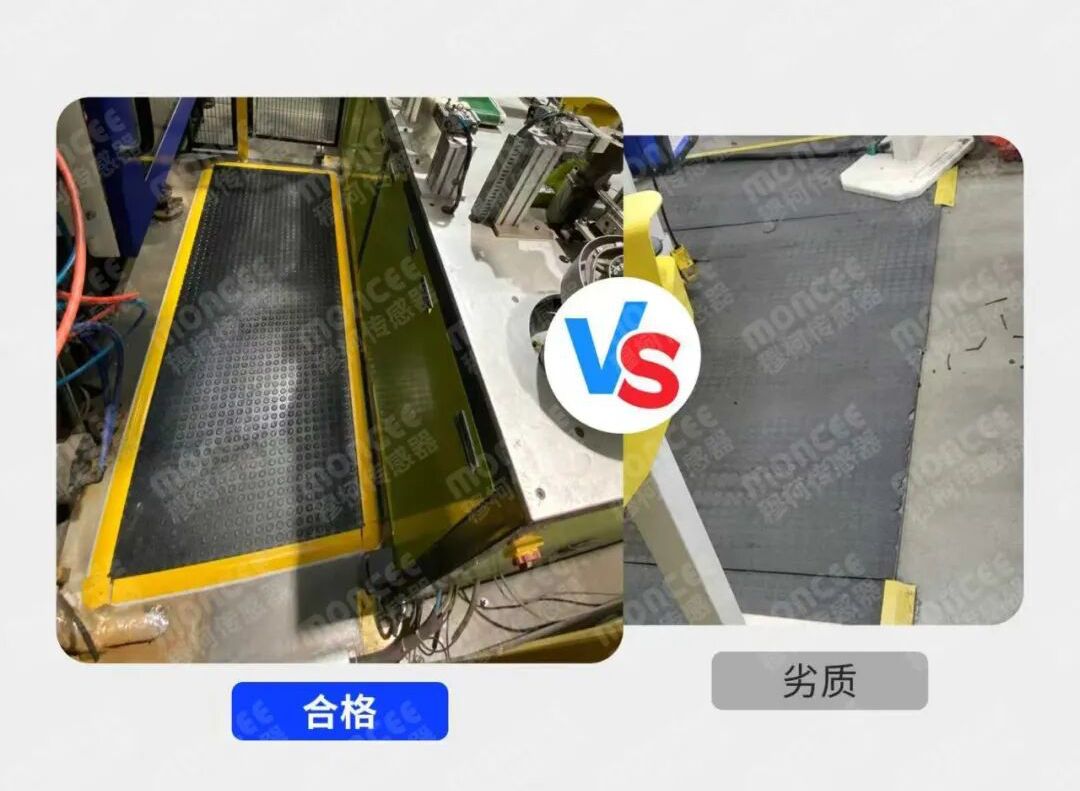
Designing Protection Around the Actual Hazard Area
One of the most important considerations when selecting a Protective Safety Mat is the relationship between the mat and the machine's hazardous area.
A mat should not simply be selected because its dimensions are convenient. Its sensing area should correspond to the way personnel interact with the machine.
For example, an operator may approach a machine from one side for loading operations, while maintenance personnel may require access from another direction. A robot cell may have a larger open area around the equipment, while a compact machine may only require a small detection zone immediately in front of the operating position.
This means the first stage of selection should be understanding:
Where can personnel enter, stand, or approach the hazardous area during normal machine operation?
Once these locations are identified, the appropriate mat size or combination can be determined.
For larger areas, multiple Protective Safety Mats can be installed together to create a broader sensing zone. This modular approach allows OEM engineers to adapt the safety area to different machine layouts without relying on one oversized mat.
Standard Dimensions for Efficient OEM Design
For manufacturers producing machines in repeat quantities, standard dimensions can simplify both engineering and procurement.
The available standard sizes include:
500 × 500 mm
1000 × 500 mm
1000 × 750 mm
1000 × 1000 mm
1500 × 1000 mm
2000 × 1000 mm
These options cover a range of compact and larger industrial applications.
However, machine layouts are not always standardized. Equipment frames, operator stations, conveyors, and access areas can have different dimensions from one project to another. When standard sizes do not provide the required coverage, customized dimensions can be considered within the manufacturer's available production range.
For OEM customers, this flexibility can be particularly valuable when the same safety concept must be adapted to several machine models.
Selecting the Right Protection Level for the Environment
Industrial floor conditions vary significantly between applications.
A safety mat installed inside a relatively dry automation workshop may have different environmental requirements from one used around equipment exposed to water, cleaning processes, or higher levels of moisture.
For this product range:
Standard Protective Safety Mat: IP65
Waterproof Protective Safety Mat: IP67
Choosing the protection level at the project-design stage can help OEM manufacturers avoid unnecessary redesign later.
For applications where water exposure is expected, a waterproof configuration may be more appropriate. For standard industrial environments, the IP65 version can provide the required level of protection according to the product specification.
Environmental conditions should therefore be included in the initial RFQ rather than treated as a secondary consideration.
Performance Parameters Matter Beyond Dimensions
Although dimensions are often the first specification requested by purchasing teams, other technical parameters are equally important when evaluating a Protective Safety Mat.
For the standard SC4 safety mat, key specifications include an adult activation force of approximately 30 kg and a response time of ≤30 ms.
The product is also designed to accommodate substantial loading conditions, with a dynamic load rating of approximately 500 kg and a static load rating of approximately 800 kg.
The standard operating temperature range is approximately -10°C to +60°C.
These specifications provide OEM engineers with a clearer basis for determining whether a particular configuration is appropriate for the intended working environment.
For procurement teams, requesting the complete technical specification rather than comparing products only by price can also make supplier evaluation more effective.
Specialized Applications Require Specialized Configurations
Not every industrial application can be treated as a standard machine-guarding project.
The product range includes specialized configurations for applications such as forklift safety and car wash machinery.
For example, a car wash machine safety mat can be configured with an approximately 800 × 200 mm dimension and a PUR surface. Its specified activation force is approximately 30 kg, with a response time of ≤30 ms.
This illustrates why application information is important when requesting a quotation.
Instead of sending only a dimension, an OEM customer can provide:
Machine type
Hazard location
Required sensing area
Environmental conditions
Expected loading
Required protection rating
Quantity
Whether multiple mats will be connected
Electrical integration requirements
The more complete the project information, the easier it becomes to determine a suitable Protective Safety Mat configuration.
Customization for Machine Builders and OEM Projects
Customization is especially relevant when a safety mat will be integrated into a machine as part of an OEM product design.
A customized solution may involve dimensions, configuration, application-specific requirements, or integration planning. For machines produced repeatedly, a successful customized design can then become a standardized component across multiple production batches.
This creates advantages beyond the initial installation.
A standardized Protective Safety Mat specification can simplify:
Engineering: fewer repeated design decisions.
Procurement: easier specification and quotation management.
Inventory: more predictable stocking requirements.
Production: consistent component selection across machine models.
After-sales service: easier identification and replacement of the correct safety component.
For OEM manufacturers, this long-term perspective can be more valuable than evaluating a safety mat as a one-time purchase.
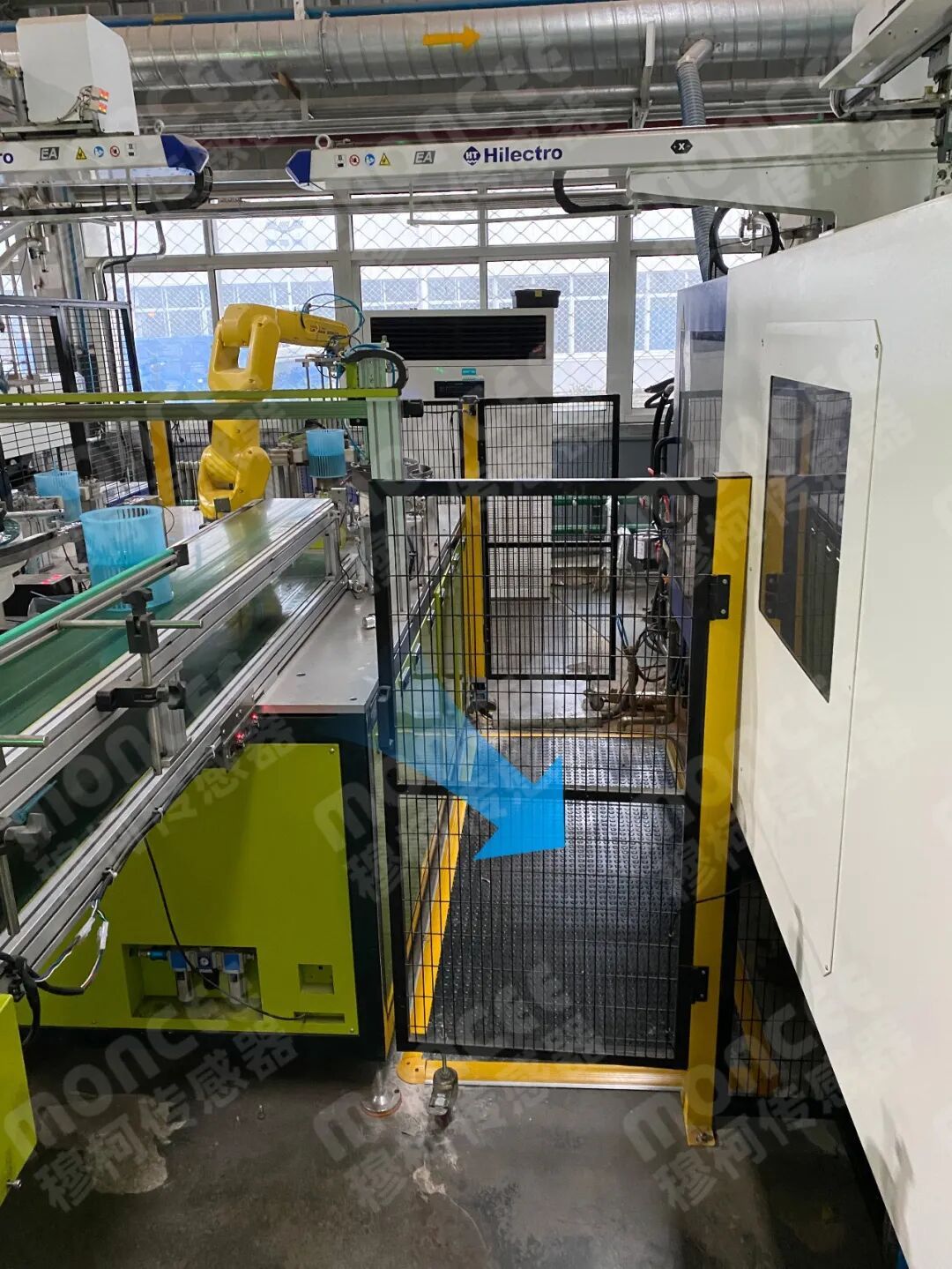
A Practical Procurement Approach for Hazardous Areas
When sourcing a Protective Safety Mat, industrial buyers should evaluate the complete application rather than focusing on a single product parameter.
A useful RFQ should clearly describe the hazardous area, machine layout, required sensing coverage, environmental conditions, loading requirements, protection rating, and expected purchase volume.
For projects involving several machines, buyers can also discuss multi-mat configurations and opportunities for product standardization.
This approach allows suppliers to respond with a solution that is better aligned with the machine rather than simply offering the nearest standard size.
Build a Protective Safety Mat Solution Around Your Machine
A Protective Safety Mat can provide an effective method for detecting personnel presence around industrial equipment when it is properly selected and integrated into the machine's overall safety architecture.
From standard SC4 dimensions and multi-mat configurations to customized sizes, IP65 standard protection, IP67 waterproof protection, and specialized applications, the product range can support different industrial requirements.
For OEM machine builders, automation integrators, equipment manufacturers, and industrial distributors, the most efficient way to begin a project is to provide the supplier with the actual application details.
Share your machine type, hazardous-area dimensions, required sensing coverage, operating environment, expected load, protection requirements, and estimated order quantity to discuss the appropriate Protective Safety Mat solution for your project.



 English
 简体中文
 Indonesian
 Previous:
 Back to list


