
As industrial automation becomes more sophisticated, Safety LiDAR and Safety Laser Scanner are increasingly discussed as solutions for non-contact detection. Both technologies use laser-based sensing and can monitor defined areas, but they should not automatically be treated as interchangeable products.
For equipment manufacturers, system integrators, and industrial procurement teams, understanding the distinction is important. Choosing the wrong sensing technology can result in unnecessary integration costs, inadequate detection performance, or a solution that does not meet the functional requirements of the final machine.
The key issue is not simply which technology is better, but which technology is appropriate for the intended application.
What Is Safety LiDAR?
LiDAR, short for Light Detection and Ranging, measures distance by emitting laser light and analyzing the returned signal. A scanning LiDAR can collect distance information across a defined field of view, allowing a machine or mobile robot to perceive its surrounding environment.
In industrial applications, a Safety LiDAR Sensor may be used for:
Obstacle detection
Mobile robot navigation
AGV and AMR environmental perception
Area monitoring
Industrial equipment detection
Configurable detection zones
The MILS-F30 provided in the product documentation is an example of an industrial laser scanning sensor designed for navigation and obstacle avoidance. It provides a 270° scanning angle and a maximum detection distance of 50 m.
It also supports configurable detection areas and multiple area groups, making it suitable for applications where the monitored area changes according to operating conditions.
However, buyers should pay close attention to the terminology. A laser-based sensor used for industrial detection is not automatically equivalent to a certified Safety Laser Scanner.
What Is a Safety Laser Scanner?
A Safety Laser Scanner is generally designed specifically for industrial safety applications where the sensing device forms part of a safety-related control function.
Instead of simply providing environmental information, a safety scanner is typically expected to monitor defined protective fields and initiate a safety response when an unauthorized person or object enters the protected area.
Typical applications include:
Machine access protection
Robot cell protection
Hazardous-area monitoring
Automatic machinery guarding
Personnel detection
Protective field monitoring
The critical distinction is therefore related to the intended safety function, system architecture, and applicable functional-safety requirements, rather than merely the fact that both devices use laser scanning.
When evaluating a product for a formal machine-safety function, buyers should verify the manufacturer's certification, safety integrity specifications, applicable standards, and safety documentation rather than assuming that any LiDAR with an "area detection" function qualifies as a Safety Laser Scanner.
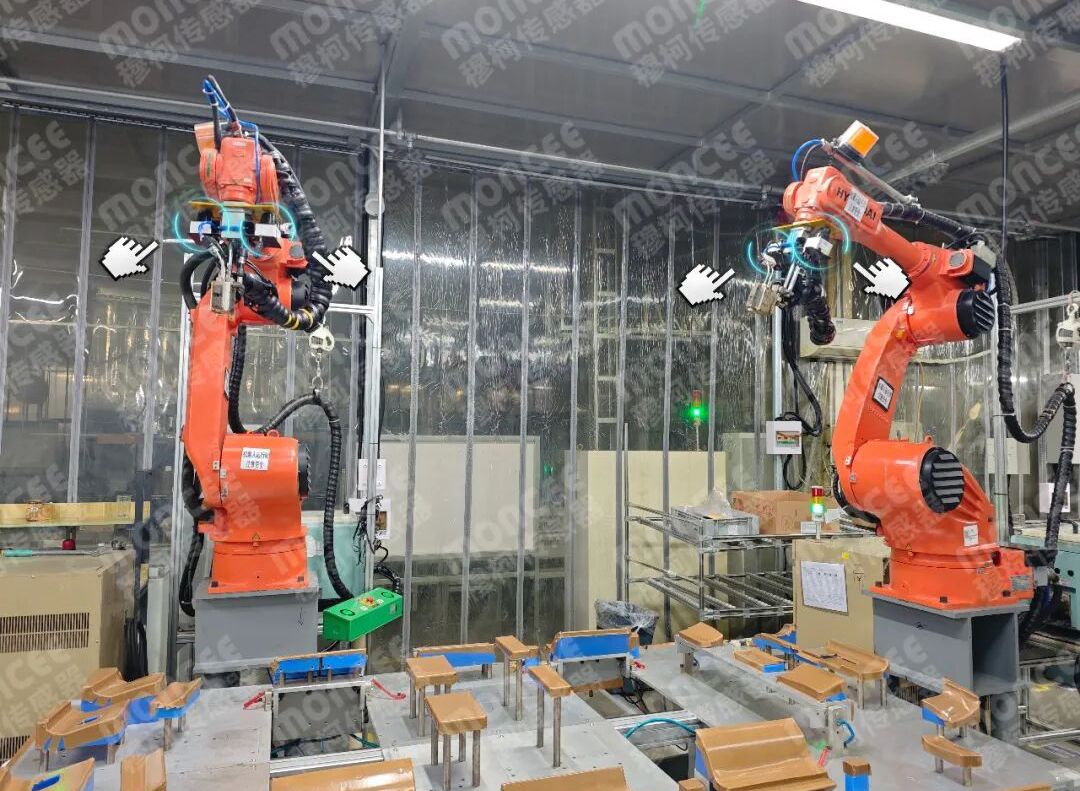
Safety LiDAR vs. Safety Laser Scanner: The Core Difference
The simplest way to understand the difference is to look at their primary design objectives.
Comparison | Safety LiDAR / Industrial LiDAR | Safety Laser Scanner |
Primary purpose | Environmental perception, detection and navigation | Safety-related area protection |
Typical applications | AGV, AMR, obstacle avoidance, logistics | Machine guarding, personnel protection |
Main output | Distance/scanning data and detection information | Safety-related detection/status |
Configuration | Detection areas and scanning parameters | Protective fields designed for safety functions |
Key purchasing concern | Range, FOV, accuracy, integration | Safety certification, response, protective-field performance |
| Typical buyer | OEM, robot manufacturer, system integrator | Machine builder, safety integrator, industrial safety engineer |
This table should be viewed as a purchasing framework rather than a universal technical definition. Product capabilities vary by manufacturer, and the exact classification must always be verified against the supplier's documentation.
1. Compare the Intended Application First
The most important difference appears when looking at what the sensor is expected to accomplish.
For an AGV, the LiDAR may primarily need to answer:
“Is there an obstacle ahead, and how far away is it?”
The vehicle controller can then use this information for navigation, speed adjustment, or obstacle avoidance.
For a machine guarding application, the question may instead be:
“Has a person entered a hazardous protective field, and must the machine enter a safe state?”
These are fundamentally different system requirements.
A sensor that performs well for AGV obstacle avoidance should not automatically be selected for a safety-related machine shutdown function without verifying whether its documented safety characteristics meet that application.
2. Detection Range Is Often a Major Advantage of Industrial LiDAR
One major strength of industrial LiDAR is its ability to provide relatively long-range environmental perception.
The MILS-F30 has a maximum detection range of 50 m, with a specified 20 m detection distance at 10% reflectivity.
This makes long-range LiDAR particularly attractive for:
AGV and AMR obstacle detection
Automated logistics
Large-area environmental monitoring
Industrial vehicle perception
Outdoor automation applications
For a mobile robot, detecting an obstacle well before reaching it can provide additional time for the control system to react.
By contrast, a machine safety scanner is generally selected according to the protective field and safety distance required by the specific hazardous machine.
Therefore, maximum range should not be used as the sole metric for comparing the two technologies.
3. Field of View and Protective Fields Serve Different Purposes
The MILS-F30 provides a 270° scanning angle and default angular resolution of 0.25°.
Its software supports multiple configurable detection areas, including rectangular, sector, and polygonal shapes. It supports up to 16 area groups, with three areas available within each group.
This flexibility is particularly valuable for mobile equipment.
For example, an AGV may need different detection areas depending on:
Forward movement
Turning
Loading
Unloading
Different speed modes
The detection field can therefore be adapted to different operating conditions.
A Safety Laser Scanner, on the other hand, is generally selected and configured around defined protective fields and safety-related machine functions.
For procurement teams, the important question is:
Do I need flexible environmental detection, or do I need a formally defined safety protective field?
That distinction can significantly narrow the appropriate product category.
4. Response Time Must Be Evaluated at System Level
Response time is important for both technologies, but the way it is evaluated can be different.
The MILS-F30 documentation specifies an initial area-detection response time of approximately 66 ms. It also provides area-trigger information and configurable recovery delay functions.
For an AGV, this response time should be considered alongside:
Vehicle speed
Braking distance
Controller response
Motor response
Load characteristics
For machine safety, the analysis can be even more stringent because the complete safety-related stopping process may need to satisfy specific requirements.
Therefore:
Sensor response time ≠ complete system stopping time.
Industrial buyers should ask suppliers to provide application-specific calculations rather than comparing response-time numbers in isolation.
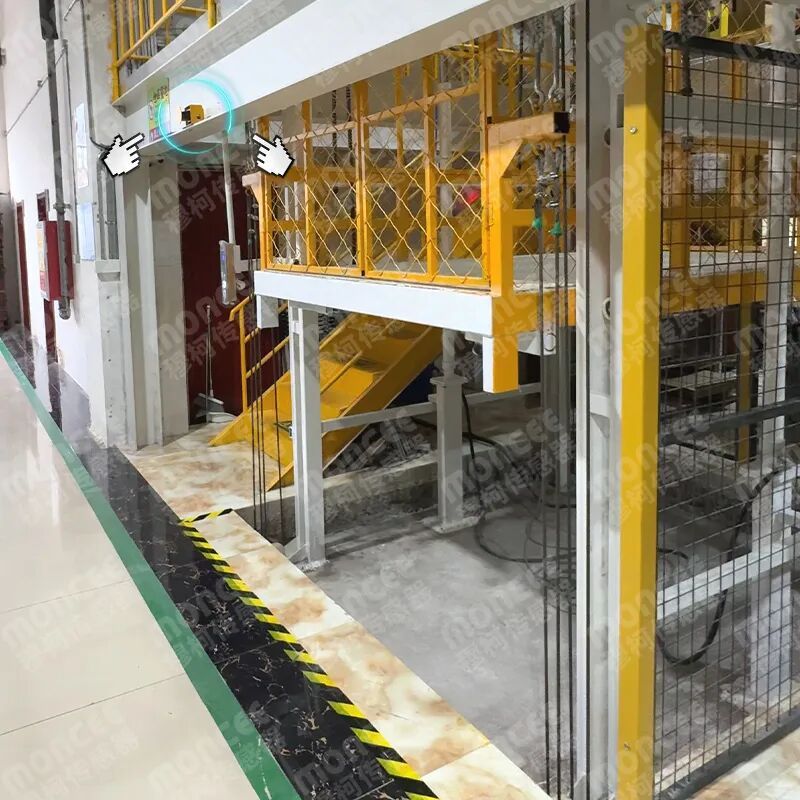
5. Environmental Performance Is a Commercial Consideration
Industrial LiDAR may need to operate in environments with dust, moisture, strong lighting, temperature fluctuations, or outdoor weather.
MILS-F30 is specified with:
IP65 protection
Operating temperature: -25°C to +55°C
Ambient light resistance up to 80,000 lux
905 nm Class 1 laser
These specifications can be particularly relevant for AGVs, outdoor logistics, and industrial automation equipment.
However, an IP rating or environmental specification does not by itself establish whether a sensor is suitable for every safety application.
For procurement, environmental suitability and functional-safety suitability should be evaluated as two separate questions.
6. Communication and Integration Can Influence the Total Project Cost
For OEMs and system integrators, integration is often as important as sensor performance.
MILS-F30 supports Ethernet and Type-C interfaces for configuration and data communication. It also supports active and passive data transmission modes.
This makes communication architecture an important consideration when integrating the sensor with:
PLC systems
AGV controllers
AMR controllers
Robot controllers
Industrial PCs
Automated logistics systems
The software's area import/export function can also help replicate established configurations across multiple units.
For an OEM purchasing hundreds of sensors rather than one prototype unit, these features can affect deployment efficiency and overall project cost.
7. Don't Confuse 2D LiDAR with 3D Safety Sensing
Another common source of confusion is the difference between 2D LiDAR and 3D sensing.
MILS-F30 is a 2D scanning sensor intended for applications such as navigation, obstacle avoidance, and area detection.
The MZS-01 in the supplied documentation uses 3D ToF technology, with a 0.2–5 m working range, 70° × 50° FOV, 640 × 480 resolution, 20–25 fps frame rate, and IP67 protection.
This illustrates why buyers should define the sensing geometry before selecting a product.
If the project requires:
Long-range planar detection
→ A 2D LiDAR architecture may be appropriate.
Three-dimensional spatial perception
→ A 3D ToF or comparable 3D sensing solution may be more appropriate.
Neither is universally better; they solve different sensing problems.
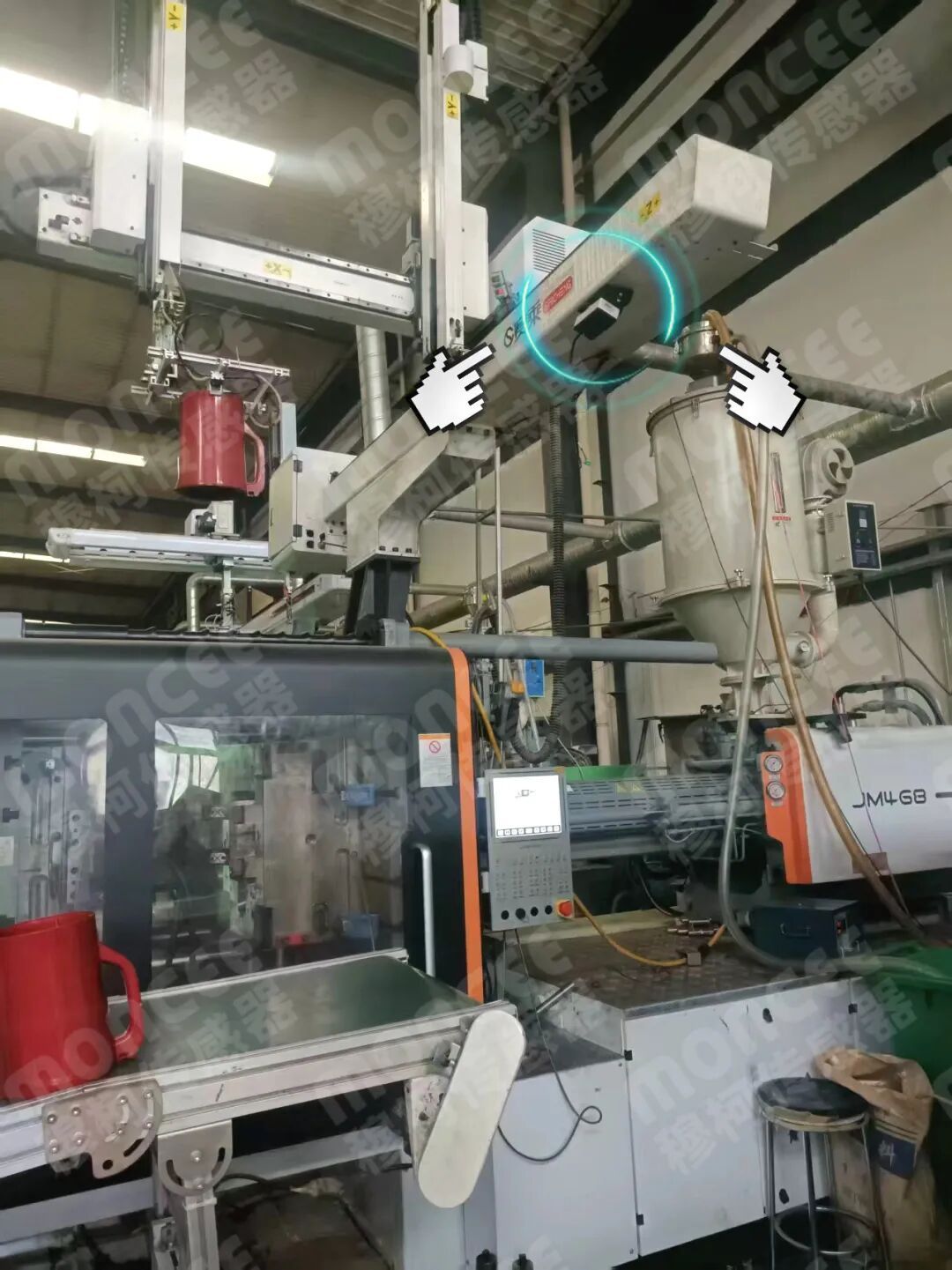
8. What Should Industrial Buyers Ask a Supplier?
When requesting quotations for Safety LiDAR or Safety Laser Scanner products, avoid sending only:
“Please send your price and catalog.”
A more effective RFQ should provide the supplier with project information such as:
Application
AGV, AMR, robot, machine guarding, logistics, or area monitoring.
Detection target
Person, vehicle, pallet, machine component, or general obstacle.
Required range
Expected minimum and maximum detection distance.
Scanning area
Required FOV and expected mounting position.
Operating conditions
Indoor/outdoor, temperature, dust, moisture, ambient light, etc.
System interface
PLC, Ethernet, digital I/O, robot controller, or other communication requirements.
Quantity
Prototype quantity, annual demand, and expected mass-production volume.
Safety requirements
Whether the device is being used for general detection or as part of a formal safety-related control function.
Providing this information allows suppliers to recommend the appropriate product category rather than simply quoting their highest-specification model.
9. From a Business Perspective, Product Selection Is Only the Beginning
For industrial buyers, the lowest unit price does not necessarily represent the lowest total cost.
A more useful procurement calculation should consider:
Sensor price + integration cost + installation cost + engineering time + commissioning + maintenance + replacement + potential downtime
For OEM manufacturers, another factor is scalability.
A sensor that works well in one prototype but is difficult to configure, integrate, or reproduce across 500 machines may create substantial hidden costs.
Therefore, when evaluating a Safety LiDAR supplier, consider not only the hardware but also:
Sample availability
Technical support
Documentation
Configuration software
OEM/ODM capability
Customization
Communication support
Production capacity
Delivery reliability
After-sales service
For long-term B2B cooperation, these factors can be just as important as the sensor's headline specifications.
Which One Should You Choose?
There is no universal answer that Safety LiDAR is better than Safety Laser Scanner, or vice versa.
The appropriate choice depends on the intended function.
Choose an Industrial Safety LiDAR when your priority is:
Long-range obstacle detection
AGV/AMR environmental perception
Navigation assistance
Flexible area monitoring
Industrial logistics
Large-area detection
Integration with a mobile robot control system
Consider a Safety Laser Scanner when your priority is:
Machine guarding
Personnel protection
Defined hazardous-area monitoring
Safety-related protective fields
Formal machine-safety functions
Compliance with applicable functional-safety requirements
Most importantly, do not select a product based solely on terminology. Verify the actual product documentation, certification, intended use, safety specifications, and system architecture.
Conclusion
The difference between Safety LiDAR and Safety Laser Scanner is not simply a difference in scanning technology. The more important distinction is what the product is designed and qualified to accomplish within an industrial system.
Industrial LiDAR such as MILS-F30 can provide wide-area scanning, long-range detection, configurable detection zones, and flexible communication for applications including mobile robots, logistics, and obstacle avoidance.
A Safety Laser Scanner, meanwhile, should be evaluated primarily according to its documented ability to perform the required safety-related protective function.
For businesses purchasing sensors, the best approach is therefore to start with the application and risk requirements, then determine the appropriate sensing technology.
If the goal is AGV/AMR obstacle detection, navigation, or industrial environmental perception, an Industrial Safety LiDAR may provide the flexibility and range required.
If the goal is formal machine guarding or personnel protection, buyers should specifically evaluate Safety Laser Scanners with the relevant safety documentation and certifications.
Ultimately, the right purchasing decision is not:
“Which product has better specifications?”
It is:
“Which sensing solution provides the required performance, integration capability, safety characteristics, and total cost of ownership for my application?”
For OEMs, system integrators, and industrial equipment manufacturers, answering that question before placing a bulk order can significantly reduce integration risk while creating a more scalable and commercially viable automation solution.



 English
 简体中文
简体中文 Indonesian
 Previous:
 Back to list


