
Choosing the right Safety Light Curtain is not simply a matter of selecting the lowest-priced sensor or the longest detection range. In industrial automation, the right safety light curtain must match the machine’s hazard profile, stopping performance, installation environment, and control architecture.
An unsuitable device can create unnecessary downtime, false trips, difficult commissioning, or—more seriously—an inadequate safeguarding solution.
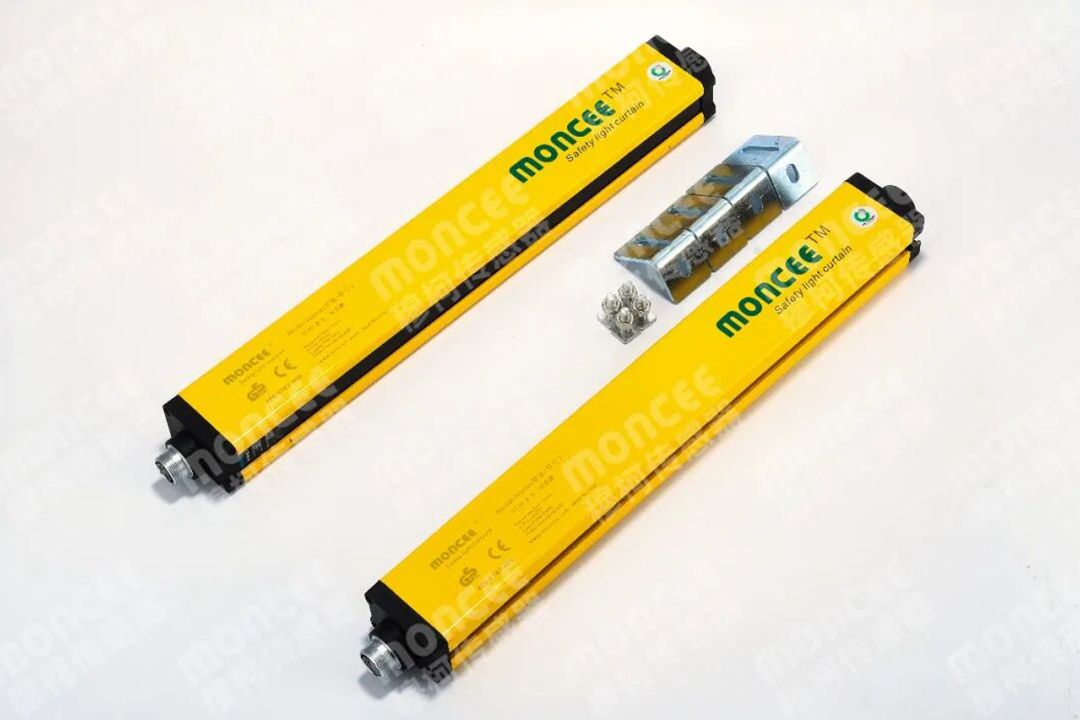
The GT Series Safety Light Curtain from Moncee is designed for industrial safety applications including presses, punch machines, shearing machines, injection molding machines, assembly equipment, cutting machines, and automated production lines. The product documentation specifies selectable beam spacing, protection heights, IP65 protection, and compatibility with dedicated safety controllers.
This guide explains the three parameters that should receive the most attention when evaluating a Safety Light Curtain, followed by a practical brand comparison checklist.
1. Resolution: Can the Safety Light Curtain Detect the Hazard?
The first parameter to evaluate is resolution, which determines the minimum object size that can reliably interrupt the sensing field.
In a typical Safety Light Curtain, an emitter sends multiple infrared beams toward a receiver. When an object enters the protected area and interrupts the beams, the system generates a safety signal to the machine control system.
The GT Series provides multiple beam-spacing options, including 10 mm, 20 mm, 30 mm, 40 mm, and 80 mm, depending on the model. This allows the light curtain to be selected according to the required detection capability.
Why beam spacing matters
Different machines present different access risks:
Finger detection: generally requires finer resolution.
Hand detection: can use a moderate resolution depending on the risk assessment.
Body or access detection: may use larger beam spacing when appropriate.
Large-area machine guarding: requires consideration of protection height and access geometry in addition to resolution.
A common mistake is to assume that a smaller beam spacing is always better. It may provide finer detection, but the correct specification should ultimately be determined by the hazard assessment and applicable safety requirements.
For comparison purposes, buyers should ask each manufacturer:
“What is the effective resolution of this model, and what type of access does it support?”
Do not compare products based only on the number of beams.
2. Response Time and Safety Distance: How Quickly Can the Machine Stop?
A Safety Light Curtain does not physically stop a machine. Its role is to detect an intrusion and transmit a safety signal to the machine's control system.
Therefore, response time is a critical part of the overall safety calculation.
The GT Series documentation specifies a response time of ≤15 ms for the listed safety controller configuration. The controller documentation also specifies automatic reset and release-delay parameters, depending on the model.
However, response time should never be considered independently.
The actual required safety distance depends on the complete system, including:
Light curtain response time
Safety controller response time
Machine stopping time
Machine overrun or braking characteristics
Resolution and detection characteristics
Installation geometry
This is why a professional Safety Light Curtain selection process should evaluate the entire safety circuit, rather than treating the sensor as an isolated component.
ROI connection
Safety distance also affects productivity.
If the safety device is installed too far away, operators may need to reach farther into the work area before interacting with the machine. If installed incorrectly or without considering the machine's stopping characteristics, it may compromise protection.
Conversely, a correctly engineered system can provide effective protection without unnecessarily restricting the operator's working area.
That is where compliance and ROI meet: the goal is not simply maximum protection, but correctly engineered protection with minimal disruption to production.
3. Protection Height, Range and Environmental Rating
The third key parameter is physical suitability.
A Safety Light Curtain may have excellent optical performance, but if its protection height, operating range, mounting configuration, or environmental rating does not match the machine, it is not the right product.
The GT Series provides:
Working range: 0–20 m, depending on configuration
Protection height: approximately 100–2840 mm, depending on model
Protection rating: IP65
Operating temperature: approximately -10°C to +55°C, with the documented condition that condensation should be avoided
The series also uses a compact 35 × 50 mm housing and provides mounting accessories such as rear sliding brackets, two-end buffer brackets, and floor-mounting solutions.
These specifications become especially important in industrial environments where equipment may experience dust, vibration, temperature variation, or frequent operator access.
Don't overlook installation
Installation quality can directly influence the reliability of a Safety Light Curtain.
The GT Series documentation includes dedicated mounting structures and wiring diagrams for NPN/PNP configurations and relay-based safety controller connections. This can simplify integration with different machine control architectures.
For OEM machine builders, this is particularly important because a safety sensor should not only meet the technical specification—it should also be practical to integrate, commission, maintain, and replace.
2024 Safety Light Curtain Brand Comparison Checklist
When comparing Safety Light Curtain manufacturers, avoid evaluating products on price alone. Use the following checklist to create a more meaningful comparison.
| Evaluation Item | Questions to Ask |
| Resolution | What beam spacing options are available? |
| Protection Height | Does the sensing height cover the complete hazard zone? |
| Operating Range | Is the sensing distance sufficient for the machine layout? |
| Response Time | What is the documented response time of the complete safety system? |
| Safety Rating | |
| Environmental Protection | Is the product suitable for the actual temperature, dust, moisture, and vibration conditions? |
| Controller | Is a dedicated safety controller required? |
| Output | Are NPN, PNP, relay, or other required interfaces available? |
| Installation | Are brackets and mounting accessories available? |
| Diagnostics | Can operators quickly identify faults or abnormal conditions? |
| Maintenance | How easy are alignment, replacement, wiring, and troubleshooting? |
| Customization | Can protection height, beam spacing, cables, or accessories be configured? |
| Application Experience | Does the supplier have experience in similar machinery? |
| Total Cost | What are the purchase, installation, maintenance, and downtime costs? |
This approach creates a much more useful comparison than simply asking, “Which Safety Light Curtain is cheapest?”
Why the Right Safety Light Curtain Improves ROI
A professional safety solution should contribute to both risk reduction and operational efficiency.
A correctly selected Safety Light Curtain can help manufacturers:
Protect operators from hazardous machine movements
Reduce unnecessary machine interruptions
Simplify machine integration
Improve accessibility around automated equipment
Standardize safety systems across production lines
Reduce maintenance and replacement complexity
Support machine safety compliance
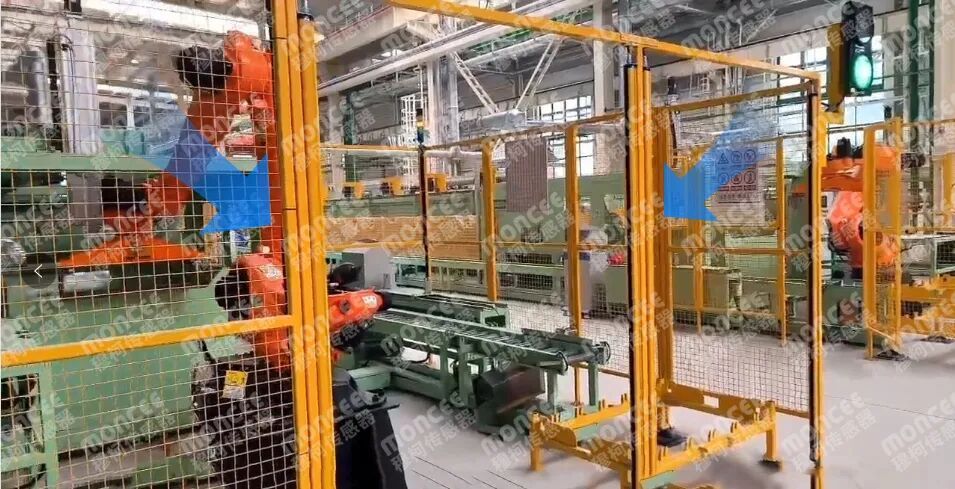
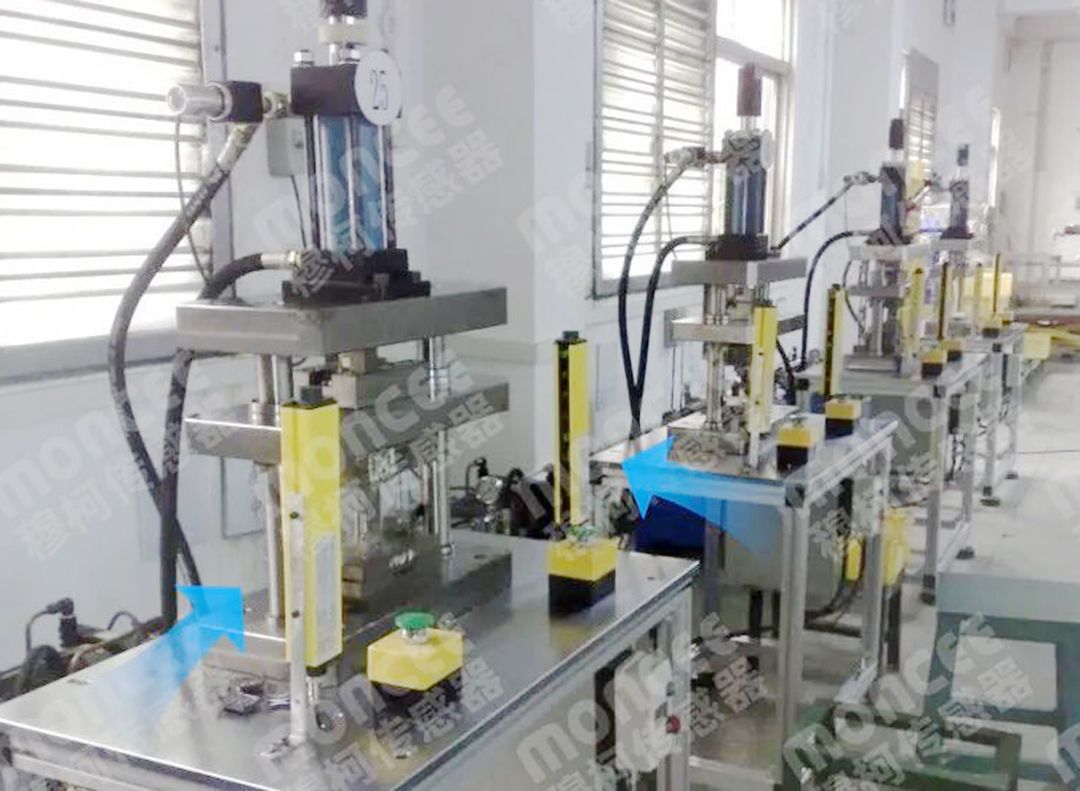
The GT Series is documented for applications including press machines, punch machines, shearing machines, injection molding machines, cutting machines, assembly machines, automated production equipment, and other industrial machinery. The brochure also shows practical installation examples on stamping and automated equipment.
For machine builders, the value of a Safety Light Curtain therefore extends beyond the sensor itself. The real ROI comes from selecting a safety architecture that fits the machine from design and commissioning through long-term operation.
Final Takeaway
Selecting a Safety Light Curtain should begin with the hazard, not the product catalog.
The three parameters that deserve the most attention are:
1. Resolution — Can the light curtain detect the required type of intrusion?
2. Response time and safety distance — Can the complete safety system react quickly enough for the machine's stopping characteristics?
3. Protection height, range and environmental rating — Can the product reliably protect the actual machine in its operating environment?
After these fundamentals are confirmed, use the brand comparison checklist to evaluate controllers, outputs, installation, diagnostics, certifications, maintenance, customization, and total cost of ownership.
For industrial OEMs and manufacturers, the best Safety Light Curtain is not necessarily the one with the most features. It is the one that provides appropriate protection, reliable integration, practical installation, and long-term value for the specific machine application.



 English
 简体中文
简体中文 Indonesian
 Previous:
 Back to list


