
In modern industrial environments, moving machinery, automated equipment, and powered access systems can create contact, crushing, and trapping hazards. Machine guarding is therefore an essential part of equipment design, particularly where operators work near moving components or interact with automated processes.
Safety Edge Sensors Machine guarding edge sensor solutions provide a practical way to detect physical contact along selected edges of moving or closing equipment. When the sensing edge is compressed, it generates an electrical signal that can be connected to a suitable control system to initiate a defined response, such as stopping or reversing movement where the system is designed to do so.
For machine builders, automation integrators, and industrial procurement teams, the key question is not simply whether a safety edge can detect contact. It is whether the product matches the machine’s geometry, electrical architecture, operating environment, and required safety functions.
This article explores the principal applications, operational benefits, and recommended industrial use cases for safety edge sensors, helping buyers identify suitable solutions for their projects.
1. What Is a Safety Edge Sensor for Machine Guarding?
A safety edge sensor is a pressure-sensitive device installed along an edge or contact area where physical contact needs to be detected. Unlike a sensor that monitors a target from a distance, a pressure-sensitive safety edge responds when an object or person presses against its sensing surface.
Depending on the model and system design, the device can provide a normally open (NO) or normally closed (NC) output to a compatible control circuit. The controller then processes the signal according to the machine’s safety design.
Typical installation locations include:
Powered doors, covers, and movable machine panels
Automated equipment with closing or approaching movements
Material-handling machinery and selected logistics equipment
Industrial presses and machinery requiring contact-sensitive protection
Custom-built automation systems with specific edge-detection requirements
A safety edge is a component of a broader protective system. Its effectiveness depends on correct product selection, installation, electrical integration, and validation of the complete machine safety function.
2. Key Benefits of Safety Edge Sensors in Industrial Applications
Contact detection along the protected edge
A safety edge can cover a defined contact area rather than relying on a single sensing point. This makes it useful for applications where an obstacle could be encountered at different positions along a moving edge.
For example, an automated door may need contact detection across a substantial portion of its closing edge. A correctly selected pressure-sensitive edge can provide a sensing surface suited to that geometry.
Flexible integration with machine controls
Depending on the product configuration, the output can be integrated with compatible control equipment. This allows machine designers to incorporate contact detection into the intended operating sequence.
Before ordering, buyers should confirm the output type, operating voltage, current limits, wiring arrangement, and controller compatibility. These details are particularly important when replacing an existing sensor or integrating a component into an established machine design.
Adaptability to different equipment geometries
Industrial equipment does not share a single standard edge shape. Some projects require a straight profile, while others have restricted mounting spaces or special dimensions.
A supplier that supports appropriate length and profile customization can help equipment manufacturers address these installation constraints. Any proposed bend, cut, drilled hole, or other modification should be reviewed against the product design because alterations may affect sealing, electrical reliability, or switching behavior.
Support for equipment-specific designs
A safety edge selected for one machine may not be suitable for another. Trigger distance, contact force, profile dimensions, material compatibility, and mounting conditions all influence suitability.
Working with a supplier that can review drawings and application requirements helps buyers avoid choosing a product based on appearance or price alone.
3. Recommended Industrial Use Cases
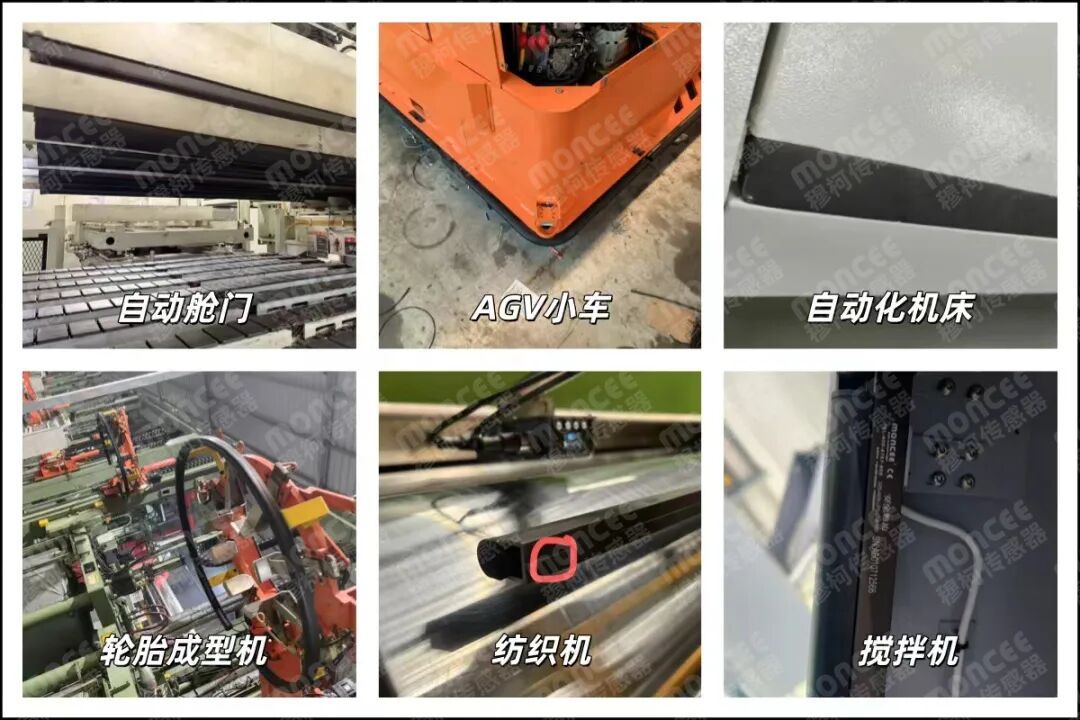
Use Case 1: Industrial Doors and Powered Access Systems
Powered doors and movable access panels can create contact hazards during closing or positioning. A pressure-sensitive safety edge may be installed along a suitable contact boundary to detect an obstruction.
Recommended for: Equipment manufacturers and system integrators developing powered doors, access panels, and similar mechanisms.
What to confirm: The length of the sensing edge, installation position, expected contact conditions, output type, environmental exposure, and the response required from the controller.
The complete door system must be designed and validated for its intended protective function. A safety edge alone does not establish that the entire system is safe.
Use Case 2: Industrial Presses and Specialized Machinery
Certain industrial machines require a contact-sensitive edge as part of their machine-specific protective arrangement. Safety edges may be considered where the equipment design calls for pressure-sensitive detection at a defined contact boundary.
Recommended for: Machinery manufacturers, retrofit specialists, and automation integrators working with specialized industrial equipment.
What to confirm: The required trigger performance, machine movement, installation constraints, environmental conditions, and compatibility with the intended control system.
The protection method must be selected through a machine-specific risk assessment. A safety edge should not be treated as a universal replacement for a guard, interlock, light curtain, or other protective device.
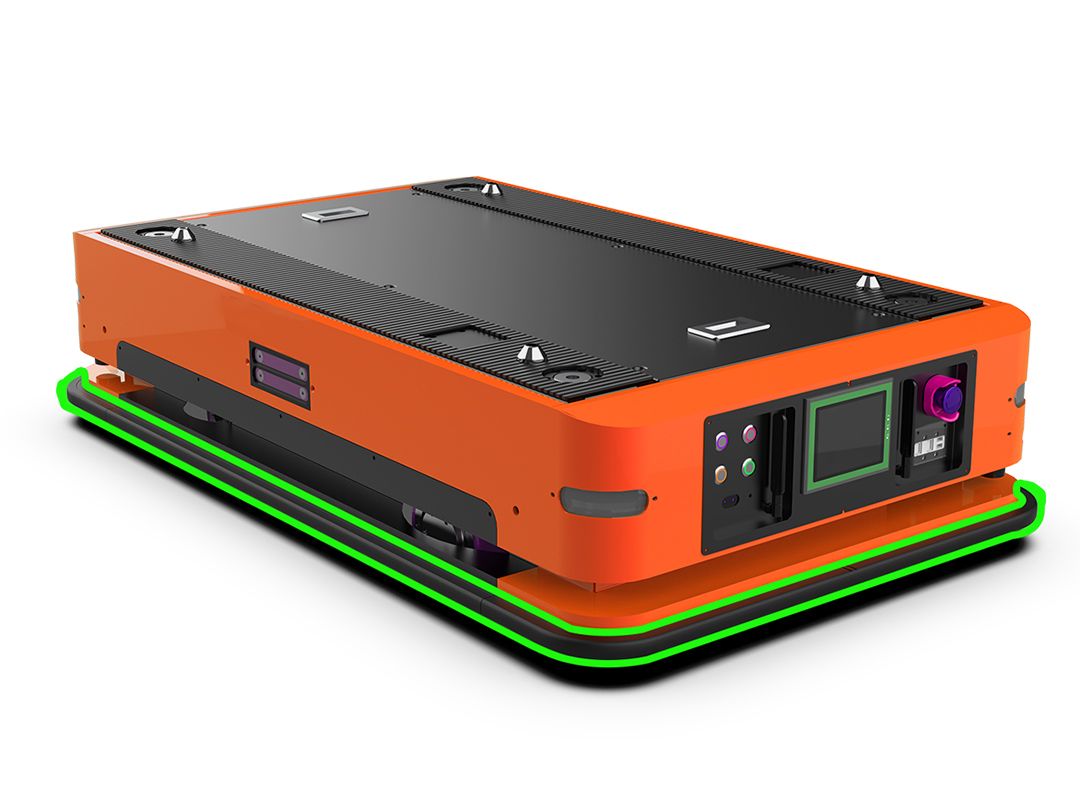
Use Case 3: Automated Guided Vehicles and Material Handling
Automated guided vehicles (AGVs) and other material-handling equipment may require contact-sensitive bumpers or edges in selected applications. A suitable sensing assembly can provide a contact signal when the equipment encounters an obstacle.
Recommended for: AGV manufacturers, logistics automation integrators, and developers of custom material-handling systems.
What to confirm: Available mounting space, contact surface dimensions, expected impact conditions, electrical interface, and how the vehicle’s control system responds to the signal.
The sensing component must be evaluated as part of the vehicle’s complete protective architecture. Buyers should not assume that a conventional machine safety edge automatically meets the requirements of every mobile robot or AGV application.
Use Case 4: Automotive and Automated Production Equipment
Automotive production includes powered doors, trunks, sunroofs, robotic work cells, and specialized assembly machinery. Depending on the design, pressure-sensitive edges may be used to detect contact at selected moving interfaces.
Recommended for: Automotive component manufacturers, production-line builders, and developers of custom automation equipment.
What to confirm: Required profile geometry, operating temperature, cycle frequency, output behavior, mounting method, and any industry-specific validation requirements.
For high-volume production, consistency between batches and clear model identification are also important for repeat orders and maintenance planning.
Use Case 5: Custom Machinery and Retrofit Projects
Legacy equipment and non-standard automation systems may have limited installation space or unusual edge geometries. A customized safety edge may be an option when an appropriate standard profile is unavailable.
Recommended for: OEM engineering teams, machine retrofit providers, and system integrators managing non-standard projects.
What to confirm: Engineering drawings, cross-sectional dimensions, required length, mounting details, cable routing, and whether the proposed shape is supported by the selected model.
Do not assume that a straight sensing edge can be bent or cut without affecting its performance. Obtain the manufacturer’s approval for any modification before installation.
4. How to Select the Right Safety Edge Sensor
A practical selection process should begin with the application, not the catalog price.
Step 1: Define the protective function. Identify the moving part, potential contact zone, hazards, and response required when the edge is activated.
Step 2: Confirm trigger performance. Match the product’s trigger distance and contact-force characteristics to the machine’s requirements. These values may vary between profiles and models.
Step 3: Check electrical compatibility. Verify the output configuration, rated voltage, maximum current, controller interface, and wiring requirements.
Step 4: Evaluate the environment. Consider temperature, dust, moisture, cleaning procedures, and other conditions that could affect the material or enclosure.
Step 5: Confirm installation and customization. Supply drawings and mounting dimensions when a non-standard profile, length, or connection is needed.
Step 6: Validate the complete system. Have qualified personnel confirm installation, control response, and the overall protective function according to applicable requirements.
5. What to Look for in an Industrial Safety Edge Supplier
For B2B buyers, a suitable supplier should offer more than a product listing. Look for clear technical documentation, model-specific electrical specifications, practical installation guidance, and the ability to review application drawings.
Customization capability can be particularly valuable for OEM projects, but every proposed modification should be checked for technical feasibility. Buyers should also confirm lead times, order quantities, warranty conditions, and after-sales support before finalizing a purchase.
Moncee offers industrial safety-edge products for selected applications, including a safety edge designed for vulcanizing machinery. Public product information for that particular model lists an EPDM shell, NO/NC signal options, IP65 protection, a rated voltage of 12 V or 24 V, a maximum voltage of 36 V, a maximum current of 30 mA, an operating temperature range of -30°C to 85°C, and a stated cycle figure of 20,000 cycles.
These specifications are model-specific examples, not universal values for every safety edge. Buyers should request the latest datasheet for the exact model and confirm test conditions and application suitability before ordering.
6. Request a Solution Matched to Your Machine
The right safety edge sensor can help equipment manufacturers address defined contact-detection requirements while supporting a more practical machine design. However, the most suitable option depends on the application, geometry, trigger performance, electrical interface, and complete safety architecture.
When requesting a quotation, provide the equipment type, installation location, required dimensions, electrical specifications, operating environment, order quantity, and any relevant drawings or photographs. This allows the supplier to assess whether a standard product is appropriate or whether a customized solution needs to be considered.
Looking for a machine guarding edge sensor for an OEM or industrial automation project? Contact Moncee to discuss your application, review compatible product options, and request a quotation based on your technical requirements.
Safety notice: A pressure-sensitive safety edge is one component within a machine’s protective system. Final selection, installation, integration, and validation must be completed by qualified personnel in accordance with the machine’s risk assessment and applicable safety requirements.



 English
 简体中文
 Indonesian
 Previous:
 Back to list


