
As industrial automation expands in 2026, manufacturers are placing greater emphasis on protecting operators, reducing equipment damage, and maintaining consistent production performance. A machine guarding edge sensor is a practical component for applications where moving machinery, closing mechanisms, or automated equipment create potential contact hazards.
Often referred to as a safety edge or pressure-sensitive safety edge, this device detects physical contact or compression and sends a switching signal to a compatible control system. When correctly selected and integrated, it can support protective functions around moving parts and help equipment respond when contact occurs.
For OEMs, machine builders, and industrial buyers, the challenge is choosing a sensor that matches the machine’s mechanical design, operating environment, and control requirements. This guide explains the key selection criteria and how to evaluate a supplier for new installations, customized projects, and replacement orders.
1. What Is a Machine Guarding Edge Sensor?
A machine guarding edge sensor is a pressure-sensitive device installed along an edge or contact area of machinery. When the sensing surface is compressed, the device changes its electrical state, allowing a connected control system to detect the event and initiate a configured response.
Unlike non-contact sensing technologies, a safety edge is particularly relevant when physical contact is part of the detection method. It can be useful around moving panels, automated doors, material-handling equipment, and selected industrial machines.
Typical application areas include:
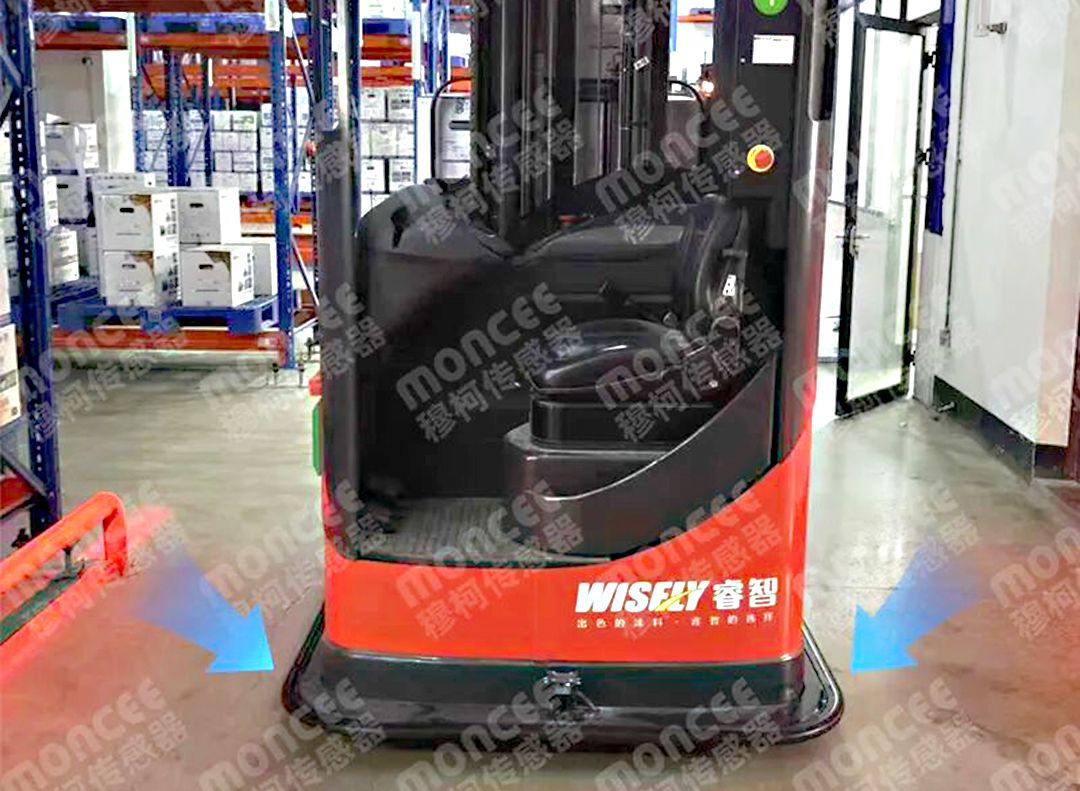
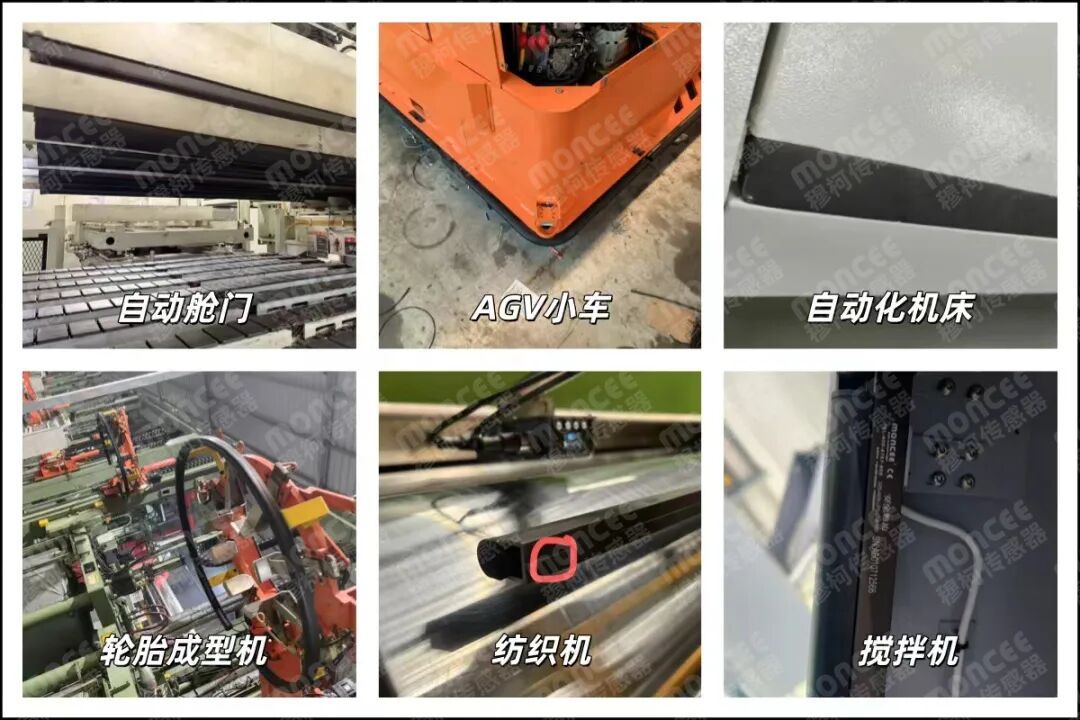
Automated guided vehicles (AGVs) and intelligent logistics equipment.
Automotive doors, trunks, and sunroof mechanisms.
Welding robots and automated assembly machinery.
Rubber-processing and vulcanizing equipment.
Material-handling systems and customized industrial machinery.
The appropriate solution depends on the hazard, machine movement, installation geometry, and required response. A pressure-sensitive edge should therefore be selected as part of the machine’s overall risk assessment—not treated as a standalone guarantee of safety.
2. Match Trigger Distance and Force to the Application
One of the most important considerations when choosing a machine guarding edge sensor is its triggering behavior.
Trigger distance describes the amount of compression associated with activating the sensor, while trigger force refers to the force required to reach the specified triggering condition. These characteristics affect how the sensor responds when contact occurs.
Different edge profiles can provide different trigger distances and force levels. A profile suitable for one machine may not be appropriate for another, even when both applications use a pressure-sensitive edge.
Before requesting a quotation, identify:
The direction and speed of the moving component.
The available installation space.
The expected contact area and mechanical geometry.
The required trigger distance and force.
The control system’s input and response requirements.
Share these details with the supplier so the proposed model can be evaluated against the actual application. Where necessary, request dimensional drawings and technical documentation before confirming the order.
3. Check Electrical Compatibility and Environmental Protection
Mechanical suitability is only one part of the selection process. A machine guarding edge sensor must also match the electrical interface and environmental conditions of the installation.
For example, Moncee’s published vulcanizing-machine safety edge specifications list an EPDM shell, rated voltages of 12 V or 24 V, a maximum withstand voltage of 36 V, current capacity up to 30 mA, normally open (NO) and normally closed (NC) signal options, an operating temperature range of -30°C to 85°C, and an IP65 protection rating. The listed cycle figure is 20,000 operations. These values apply to the referenced product information and should not automatically be assumed for every model. <Cite refs={["turn398558search0"]}/>
When reviewing specifications, confirm:
Signal type: Does the selected model provide the NO or NC output required by the design?
Electrical limits: Are the circuit voltage and current within the product’s stated limits?
Operating environment: Does the temperature range suit the installation?
Ingress protection: Is the stated protection level appropriate for the actual exposure?
Mechanical durability: Does the specified operating-cycle performance suit the expected duty?
Also verify wiring, controller compatibility, and the response required by the machine’s safety architecture. A sensor’s electrical characteristics alone do not establish the safety performance of the complete system.
4. Consider Custom Profiles and Installation Requirements
Standard profiles may not fit every machine. OEM projects and retrofit installations can involve curved surfaces, restricted mounting spaces, unusual contact geometries, or specific cable-routing requirements.
A supplier that supports customization can help assess whether a different profile, length, bending configuration, or mounting arrangement is feasible. Moncee’s published safety-edge FAQ describes custom profile and length options, drilling according to drawings, and application-specific guidance for certain curved installations. It also notes that some normally closed designs should not be bent because bending can cause false triggering or malfunction. <Cite refs={["turn398558search4"]}/>
For a customized order, prepare the following information:
Machine drawings or CAD files.
Required edge length and cross-sectional profile.
Bending radius and direction, where applicable.
Mounting method and available space.
Cable exit position and electrical requirements.
Expected order quantity and delivery schedule.
Ask the supplier to confirm feasibility before production. Approved drawings and written specifications can help reduce installation problems and prevent costly revisions after delivery.
5. Select Sensors for Different Industrial Applications
The best machine guarding edge sensor is the one that fits the specific hazard and machine design.
For AGVs and mobile equipment, the edge may be used to detect contact around selected vehicle boundaries. Profile geometry, mounting clearance, and compatibility with the vehicle’s control system are important considerations.
For automated doors and closing mechanisms, the sensor must suit the moving edge, expected contact conditions, and available installation space.
For rubber machinery, assembly equipment, and material-handling systems, buyers should examine mechanical exposure, environmental conditions, and the required triggering behavior.
For each application, verify that the proposed sensor is suitable for the identified hazard and that the complete protective system—including its controller, stopping behavior, and installation—meets applicable safety requirements. Where the risk assessment calls for additional safeguards, a safety edge should be used alongside the appropriate protective measures rather than as a substitute for them.
6. Evaluate Supplier Capability, Not Just Unit Price
A competitive quotation is valuable, but industrial buyers also need reliable technical communication, consistent specifications, and support throughout the project.
When comparing machine guarding edge sensor suppliers, consider:
Technical selection support: Can the supplier evaluate trigger distance, force, profile, and mounting conditions?
Customization capability: Can it assess non-standard lengths or installation geometries?
Documentation: Are specifications, wiring details, and drawings available for review?
Quality processes: Can the supplier explain its inspection procedures and product verification?
After-sales support: Are replacement products and technical assistance available?
Commercial clarity: Are minimum order quantities, lead times, warranty terms, and shipping costs clearly stated?
Moncee describes itself as an integrated manufacturer covering research and development, design, production, sales, and service. Its published safety-edge product page also lists customization and a one-year warranty. Buyers should confirm the applicable warranty conditions, lead time, and inspection documentation for their specific order. <Cite refs={["turn398558search0"]}/>
For overseas purchasing, including projects serving ASEAN markets, confirm the destination country, shipping terms, import documentation, and delivery schedule before placing the order.
7. Plan Replacement Orders Before Equipment Downtime
A replacement sensor should not be selected by appearance alone. Even products with similar dimensions may differ in signal type, triggering characteristics, cable arrangement, or installation requirements.
Before ordering a replacement, record the existing model number, measure the installed profile, document the wiring, and photograph the mounting arrangement. If the original documentation is unavailable, provide the supplier with the machine drawings and available product details for technical review.
For production-critical equipment, consider establishing a spare-parts plan based on the consequences of downtime and the expected procurement lead time. Replacement units should be checked for compatibility and tested as required before the machine returns to service.
8. Request a Machine Guarding Edge Sensor Quote
Choosing the right machine guarding edge sensor starts with accurate application information and a supplier capable of supporting the selection process. Trigger distance, trigger force, electrical output, environmental protection, and installation geometry should all be considered before a model is finalized.
Whether you are developing a new machine, upgrading existing equipment, or sourcing replacement sensors, prepare your technical requirements before requesting a quotation.
Contact Moncee to discuss your machine guarding edge sensor requirements, review suitable profiles, and explore customization options for your industrial safety project. Share your drawings, operating conditions, required quantities, and target delivery date to help the team assess an appropriate solution for your application.



 English
 简体中文
 Indonesian
 Previous:
 Back to list


