


x
搜索关键词



As AGV, AMR, and other mobile robots become more common in smart factories and automated warehouses, collision avoidance has become a critical part of mobile robot safety. For manufacturers and system integrators, selecting the right AGV Safety Laser Scanner or industrial LiDAR is not simply a matter of choosing the longest detection range. The sensor must match the robot's speed, stopping distance, operating environment, protective zones, communication architecture, and fleet deployment requirements.
For applications involving AGV / AMR / Mobile Robot Cluster LiDAR, a well-designed detection system can improve obstacle detection while supporting more flexible human-robot collaboration and automated material handling.
1. Start with the AGV or AMR Application, Not the LiDAR Datasheet
The first step is to understand how the mobile robot operates.
Different AGVs and AMRs may have significantly different requirements depending on:
Maximum traveling speed
Vehicle dimensions
Forward, backward, and lateral movement
Load dimensions
Turning radius
Indoor or outdoor operation
Human-robot interaction
Required stopping distance
Number of robots operating simultaneously
A LiDAR that performs well on a slow warehouse vehicle may not be suitable for a faster AMR carrying a large load.
For commercial projects, OEM manufacturers and system integrators should therefore define the complete collision-avoidance scenario before selecting the sensor.
2. Navigation LiDAR Is Not Automatically a Certified Safety Laser Scanner
One of the most important distinctions during procurement is the difference between navigation/obstacle-avoidance LiDAR and a formally certified Safety Laser Scanner.
Navigation LiDAR is commonly used to perceive the environment, detect obstacles, support localization, and assist robot navigation. A safety laser scanner, by contrast, is designed and certified for specific safety functions according to the applicable safety architecture and standards.
For example, the MILS-F30 is an industrial laser scanning sensor designed for navigation, obstacle avoidance, and area detection. Its documentation supports extensive scanning and configurable detection-area functions, but it should not automatically be marketed as a certified safety laser scanner without corresponding safety certification documentation.
This distinction is particularly important for OEM projects where customers specify functional-safety requirements during procurement.
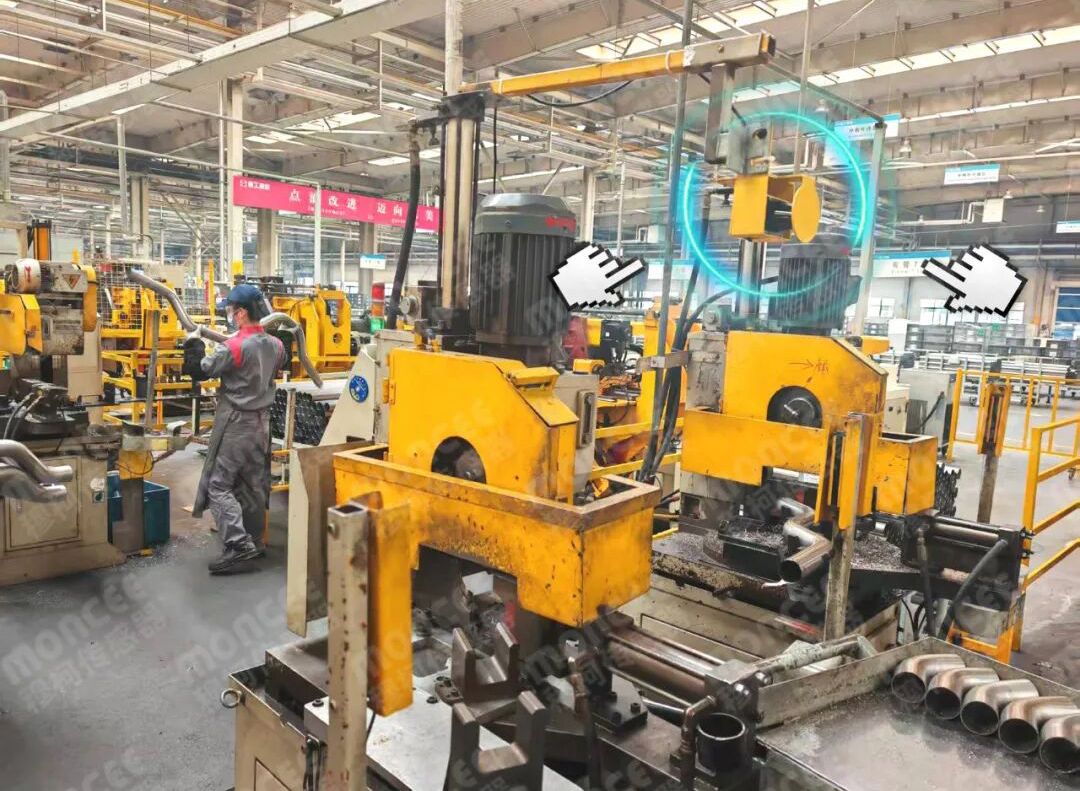
3. Evaluate Scanning Coverage and Detection Performance
Scanning coverage directly affects how effectively an AGV or AMR can perceive its surroundings.
MILS-F30 provides a 270° scanning angle, with a default angular resolution of 0.25°. Its maximum detection distance is 50 m, while the documented detection distance at 10% reflectivity is 20 m. Measurement accuracy is approximately ±2 cm under specified conditions.
This combination can be useful when designing detection systems for:
AGV obstacle detection
AMR navigation
Warehouse logistics
Automated production lines
Mobile robot fleet management
Industrial area monitoring
However, maximum range should never be treated as the only selection criterion. The effective detection distance must correspond to the robot's actual operating conditions.
4. Match Detection Response to Stopping Distance
A critical engineering question is:
Can the robot detect an obstacle early enough to take the required action?
The answer depends on the complete response chain:
Obstacle detection → LiDAR processing → communication → controller decision → drive command → mechanical braking
MILS-F30 documentation specifies an approximately 66 ms area-detection initial response parameter. This should not be interpreted as the complete stopping time of an AGV or AMR. The actual stopping distance also depends on vehicle speed, controller response, motor/drive response, load, floor conditions, and braking performance.
Therefore, during system design, engineers should evaluate the complete response chain rather than comparing LiDAR response figures in isolation.
5. Use Multi-Zone Detection for More Flexible Collision Avoidance
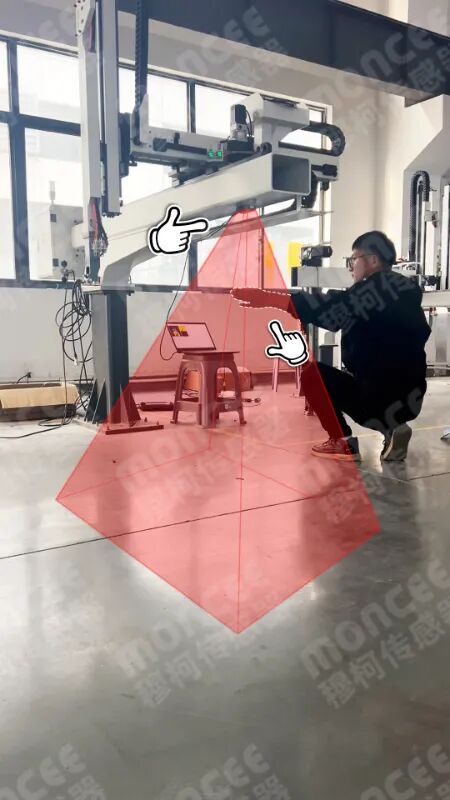
A major advantage of configurable LiDAR is the ability to create different detection zones for different operating conditions.
MILS-F30 supports 16 area groups, with each group containing three configurable areas. Four digital inputs can be used to switch between area groups.
The three areas can be configured as:
Outer area
Middle area
Inner area
Supported area shapes include rectangles, sectors, and polygons.
This architecture provides more flexibility than a simple single detection boundary.
For example, an AMR can use:
Outer zone → early obstacle warning
Middle zone → speed reduction or operational adjustment
Inner zone → emergency response or stop command
The exact machine behavior should be determined by the overall control and safety architecture.
6. Consider the Real Industrial Environment
A LiDAR selected for a laboratory may behave differently in an actual factory.
Important environmental factors include:
Dust and contamination
Temperature
Ambient light
Reflective surfaces
Metallic structures
Transparent or dark objects
Outdoor illumination
Water or cleaning processes
MILS-F30 is documented with IP65 protection, an operating temperature range of approximately −25°C to +55°C, ambient-light resistance up to 80,000 lux, and a 905 nm Class 1 laser.
These specifications can make it a practical candidate for demanding industrial environments, but the final suitability should still be verified against the actual installation conditions.
7. Check Communication and Integration Requirements
For OEMs and system integrators, communication capability can be just as important as optical performance.
MILS-F30 supports Ethernet and Type-C interfaces for configuration and data communication. The documented architecture also supports active and passive data transmission modes.
Before purchasing, engineers should confirm:
PLC or robot-controller compatibility
Required communication protocol
Data transmission mode
I/O requirements
Response timing
Configuration software requirements
Diagnostic and maintenance functions
For a fleet of mobile robots, standardized communication and configuration can significantly reduce commissioning and maintenance costs.
8. AGV / AMR Fleet Deployment Requires More Than One Sensor
When an industrial customer operates dozens or hundreds of AGVs and AMRs, the procurement question changes from:
“Which LiDAR has the best specifications?”
to:
“Which LiDAR can be efficiently deployed, configured, maintained, and supported across the entire fleet?”
MILS-F30 supports area configuration import/export, which can help replicate established configurations between devices.
For OEM manufacturers and system integrators, this can reduce repetitive commissioning work and help standardize fleet-level deployment.
A commercial evaluation should therefore consider not only unit price but also:
Engineering integration cost
Configuration time
Installation labor
Replacement convenience
Technical support
Customization capability
Long-term supply stability
9. A Practical AGV LiDAR Selection Checklist
Selection Factor | What to Evaluat |
Detection range | Maximum and actual range at target reflectivity |
Scanning angle | Coverage required around the vehicle |
Resolution | Ability to detect target obstacles |
Response | Complete detection-to-stop response chain |
Detection zones | Number, shape, and switching flexibility |
Environment | Temperature, dust, light, water, reflections |
Communication | Ethernet, I/O, protocol compatibility |
Installation | Mounting position and blind spots |
Fleet deployment | Configuration replication and maintenance |
| Commercial support | OEM customization, technical support, supply capacity |
Conclusion: Select the LiDAR Around the Robot's Real Requirements
Choosing an AGV Safety Laser Scanner for collision avoidance requires more than comparing detection distance or scanning frequency.
For AGV / AMR / Mobile Robot Cluster LiDAR projects, buyers should evaluate the entire system: robot speed, stopping performance, scanning coverage, configurable protective areas, environmental conditions, communication interfaces, installation constraints, and fleet deployment.
An industrial LiDAR such as MILS-F30 can provide powerful scanning and configurable area-detection capabilities for navigation and obstacle-avoidance applications. However, if a project specifically requires a certified safety laser scanner, the required functional-safety certifications and system architecture must be verified separately.
For OEM manufacturers and system integrators, the best commercial choice is ultimately the sensor that provides the right balance of technical performance, integration flexibility, deployment efficiency, customization capability, and total project cost.
 Artikel Sebelumnya:Safety Pressure Mat: Aplikasi Industri, Fungsi Penghentian M
 Kembali ke daftar
Artikel Berikutnya:Di Mana Saya Bisa Membeli Sensor Safety-Sensitive Edge untuk

 English
 简体中文
 Indonesian


